Two Audiences, Two Screens: The Age Gap That Is Quietly Fracturing the Food Television Landscape

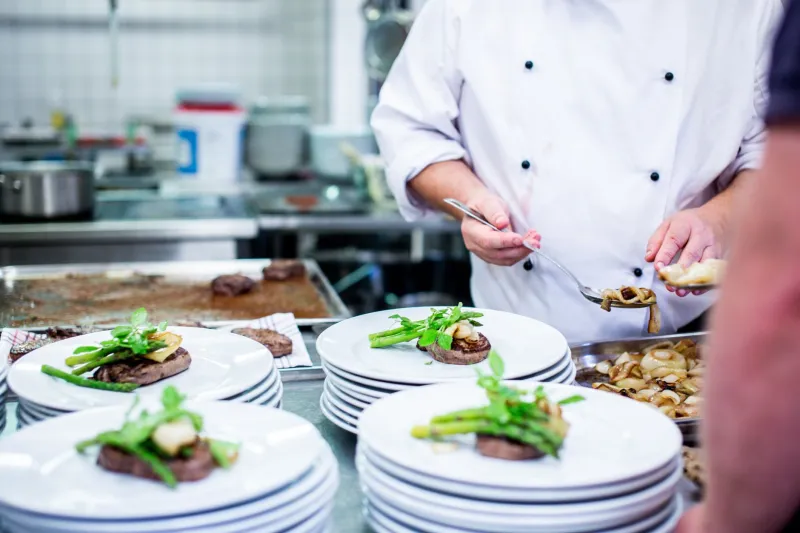
Photo: U.S. Air Force photo by Tech. Sgt. Anthony Hetlage, Public domain, via Wikimedia Commons
Picture two Americans settling in to watch food television on the same Tuesday evening. The first is a sixty-three-year-old retired teacher in suburban Columbus, Ohio, who has been a devoted viewer of culinary programming since the era of Julia Child and has strong opinions about knife technique. The second is a twenty-two-year-old graphic designer in Austin, Texas, who discovered food content through short-form video and whose cooking education has been conducted almost entirely through a phone screen.
These two viewers are, in the most technical sense, part of the same market. In almost every other sense, they are watching different mediums, seeking different satisfactions, and carrying different expectations about what food television is supposed to do. The network executive or platform strategist who attempts to serve both with a single show is, in all likelihood, serving neither particularly well.
What Boomers Came For—And Still Expect
The Baby Boomer relationship with food television was formed over decades of programming that treated cooking as a serious domestic and professional discipline. The shows that shaped this generation's viewing habits—from the careful pedagogical clarity of Julia Child's demonstrations to the authoritative kitchen mastery of Jacques Pépin—established a set of expectations that have proven remarkably durable.
For this audience, the chef functions as a credentialed authority. Technique is the primary currency of respect. The narrative arc of a well-constructed episode involves a problem, a methodical approach, and a resolution that the viewer can, in principle, replicate. Pacing is measured and deliberate, allowing time for explanation and reflection. The camera lingers on the process rather than rushing toward the result.
Boomer viewers also tend to place significant value on the biographical and professional context of the chefs they follow. Where did this person train? What restaurants have they run? What does their culinary philosophy represent? These are not peripheral questions for this audience—they are the scaffolding upon which trust is built. A chef who cannot answer them convincingly, or who seems uninterested in answering them at all, will struggle to earn and retain Boomer loyalty.
What Gen Z Is Actually Watching
The Generation Z viewer arrives at food content through an entirely different formation. For most members of this cohort, the cooking show as a broadcast format is not the primary reference point—it is, in many cases, not a reference point at all. Food content, for this audience, was first encountered as short-form video: quick, visually dynamic, personality-driven, and designed to function without sound.
This origin has shaped a set of preferences that differ from their Boomer counterparts in almost every dimension. Pacing must be rapid; attention is not assumed but earned, continuously, through the sustained delivery of novelty or humor or emotional resonance. The chef need not be credentialed in any traditional sense—authenticity, defined here as the quality of seeming genuinely themselves rather than performing a professional identity, is the primary criterion for trust.
For Gen Z, food television is as much about values as it is about technique. Programming that engages with questions of sustainability, cultural heritage, economic access, and food justice is not a departure from cooking content—it is, for many in this demographic, the point of cooking content. A show that presents cuisine as culturally neutral or apolitical reads to many younger viewers as either naive or deliberately evasive.
Narrative structure, too, operates differently. Where Boomer programming tends toward linear resolution, Gen Z content is more comfortable with ambiguity, digression, and the unfinished. A chef who tries something and fails, reflects on it, and moves forward without a tidy lesson attached is not a disappointment to this audience. They are a peer.
The Shows That Fall Between the Cracks
The dominant commercial instinct in food television has long been to seek the broadest possible audience, producing programming designed to be inoffensive—and therefore appealing—to the widest demographic range. This instinct, understandable from a business perspective, has produced a significant body of culinary content that succeeds in being neither alienating nor particularly compelling to anyone.
The competition format, which has dominated network food television for the better part of two decades, represents perhaps the clearest example of this dynamic. Constructed to deliver drama, aspiration, and accessible stakes simultaneously, competition shows have historically performed reasonably well across age groups—not because they deeply satisfy any particular demographic, but because they offer enough surface-level entertainment to retain a broad viewership.
As that viewership has fragmented across an expanding universe of platforms and formats, the broad-appeal strategy has become increasingly difficult to execute. The Gen Z viewer who might once have watched a cooking competition for lack of better alternatives now has access to an essentially infinite supply of food content calibrated precisely to their preferences. The Boomer viewer, similarly, can find programming that speaks directly to their formation and values without sitting through content that feels paced for someone else's attention span.
The Case for Intentional Segmentation
The argument being advanced here is not that generational diversity in food television is a problem to be solved, but that the industry's reluctance to acknowledge it explicitly is a strategic liability. Networks and platforms that continue to program as though a unified food television audience exists are, in effect, leaving significant value unclaimed on both ends of the demographic spectrum.
Intentional age-specific programming—content developed with a clear and honest understanding of who it is for and what they are seeking—does not require abandoning crossover ambition entirely. There will always be shows, and always be chefs, who manage to speak across generational lines through sheer force of personality or the universality of their subject matter. But these exceptions should not be mistaken for a strategy.
For the platforms and networks willing to take generational segmentation seriously, the opportunity is considerable. The Boomer audience for food television is large, financially comfortable, and demonstrably loyal to programming that earns their respect. The Gen Z audience is the future of culinary culture in this country, and the brands that reach them now—on their terms, in their formats—will be positioned to grow with them for decades.
The two viewers in Columbus and Austin are not a problem. They are an invitation. The food television industry's task is to decide whether it is ready to accept it.