Between Aspiration and Anxiety: What Food Styling on Television Really Does to the Home Cook
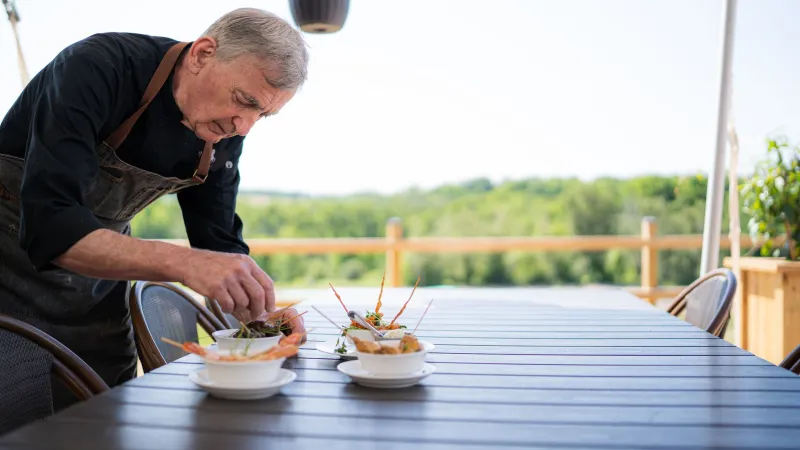
There is a dish that exists only on television. It is perfectly seared, its crust an even mahogany that no home stovetop reliably produces. Its sauce pools with geometric precision. Its garnish—a single herb sprig, placed with the casual confidence of someone who has placed ten thousand herb sprigs—suggests effortlessness while communicating mastery. It has never been eaten. It may not, technically, be edible. But it has been seen by millions of people, and it has quietly shaped what those people believe cooking is supposed to look like.
Food styling is one of the least discussed and most consequential crafts in culinary television. It operates largely below the threshold of conscious viewer awareness, which is precisely the condition under which it is most effective. And its effects—on aspiration, on confidence, on the relationship between the home cook and the act of cooking itself—are considerably more complex than the industry has historically been willing to examine.
The Invisible Architecture of the Perfect Plate
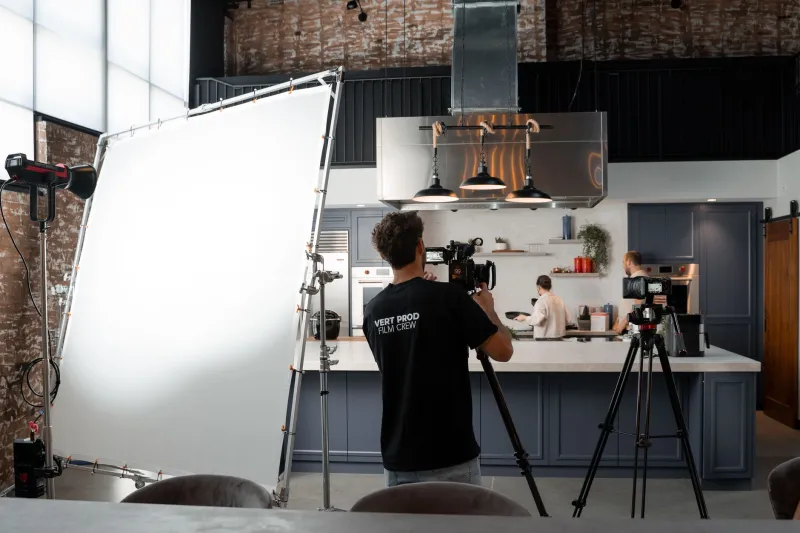
To understand what food styling does to a viewer, it helps to understand what it actually involves. A professional food stylist working on a high-end culinary production arrives on set hours before filming begins. Their toolkit includes items that have no place in a domestic kitchen: blowtorches for simulating caramelization, glycerin for maintaining the appearance of moisture, straight pins for structural support, motor oil standing in for maple syrup under certain lighting conditions, and an array of tweezers, brushes, and spritz bottles that would not look out of place in a surgical theater.
"The food you see on a finished cooking show has often been prepared multiple times," explains one veteran food stylist who has worked on productions for several major American networks and streaming platforms. "There's a hero dish—the one that goes on camera—and then there are the working dishes that the host actually cooks with. They serve very different purposes, and they look very different."
This division of labor is not deceptive in any legally actionable sense; it is simply the practical reality of producing visual content that must hold up under high-definition scrutiny and studio lighting conditions that bear no resemblance to the ambient warmth of a home kitchen. But the cumulative effect of decades of this practice on the viewing public is something that culinary educators and cognitive researchers are only beginning to document.
The Psychology of the Unattainable Plate
Research in visual psychology consistently demonstrates that images of food activate not only appetite but also social comparison mechanisms—the same cognitive processes that lead social media users to measure their own lives against the curated highlights of others. When those images are embedded within instructional content, as they are in cooking shows, the comparison becomes particularly charged.
"What we see in food television is a very specific kind of modeling behavior," notes one cognitive psychologist who studies media influence on domestic behavior. "The viewer watches an expert perform a task and then, consciously or not, uses that performance as a benchmark for their own capability. When the benchmark is artificially elevated—when it reflects professional styling rather than realistic cooking outcomes—the result is often a confidence deficit rather than inspiration."
This phenomenon has a name in educational psychology: the competence gap illusion. When the demonstrated standard of a skill is set significantly higher than what a learner can reasonably achieve, the learner is more likely to disengage from the skill entirely than to persist through the frustration of the gap. Applied to cooking, this may help explain a counterintuitive trend: despite the explosion of culinary content available to American households, home cooking rates have declined steadily over the past two decades.
Not every researcher agrees that food styling is the primary culprit—time pressures, economic factors, and the proliferation of convenient alternatives all play significant roles. But the visual standard set by television is, many argue, a contributing variable that deserves more scrutiny than it typically receives.
When Beauty Serves the Cook Rather Than the Camera
The most effective culinary shows, according to the food stylists, educators, and psychologists consulted for this feature, are those that have found ways to deploy visual excellence in service of the viewer's confidence rather than at its expense.
"There's a meaningful difference between food that looks beautiful because it's been professionally staged and food that looks beautiful because someone has been shown exactly how to achieve that result at home," explains a culinary educator who has designed curriculum for both professional cooking schools and public television productions. "The best shows close that gap. They show you the realistic version alongside the ideal version. They acknowledge that your result might look different and explain why—and why that's acceptable."
Several programs have adopted what might be termed a transparency-first approach to food presentation: showing the dish at various stages of preparation, including less photogenic intermediate steps; acknowledging when a technique is difficult and what failure looks like; and explicitly distinguishing between the visual standards of professional plating and the entirely legitimate outcomes of home cooking.
This approach requires a kind of editorial courage that not all productions are willing to exercise. There is a persistent institutional belief within culinary television that aspirational imagery is the primary driver of viewer engagement—that people tune in to be dazzled, and that dazzlement requires the full deployment of the stylist's art.
The Stylist's Perspective
Interestingly, many food stylists themselves are more ambivalent about the gap between their work and domestic reality than the industry's output might suggest.
"I love what I do, and I believe that beautiful food photography and styling serves a genuine purpose—it honors the craft, it communicates the potential of ingredients," one stylist with credits across multiple James Beard Award-winning productions told us. "But I also cook at home. I know what a Tuesday night dinner looks like. And I think there's room in this industry to be honest about the fact that those are two entirely different things without diminishing either one."
The most sophisticated corner of contemporary culinary television seems to be moving, however gradually, toward that honesty. As streaming platforms compete for viewer loyalty and the definition of gourmet entertainment continues to expand, the shows that earn lasting trust may be precisely those willing to acknowledge that the hero dish and the home dish are not the same thing—and that the latter, imperfect and personal and genuinely cooked, is the one that actually matters.