From Prime Time to Private Tables: Why Television's Most Celebrated Chefs Are Trading Network Contracts for Invitation-Only Dining
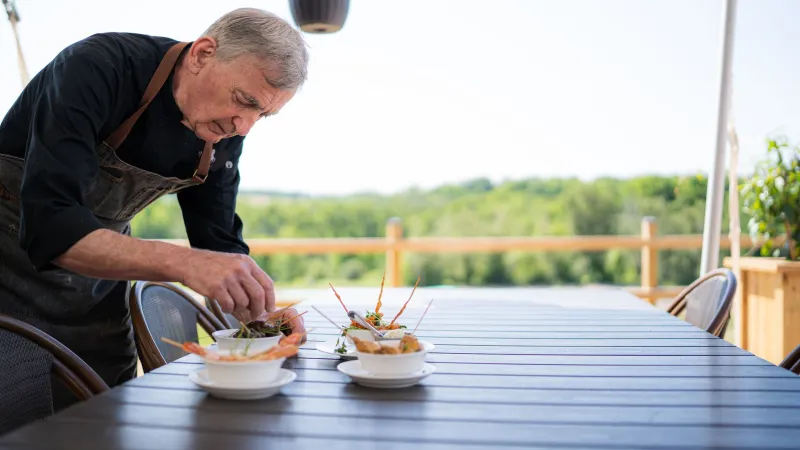
For more than two decades, the trajectory of a successful American chef followed a familiar arc: critical acclaim in the kitchen, a cookbook deal, and eventually, the crowning achievement of a television presence. The camera, it was understood, was the ultimate amplifier — a mechanism for transforming regional talent into national authority. Yet something has shifted in recent years. A quiet but unmistakable exodus is underway, and it is leading some of the most accomplished culinary personalities away from studio lights and toward candlelit dining rooms accessible only by word of mouth.
The underground supper club — long associated with scrappy culinary adventurers operating outside the mainstream — has been reborn as the preferred domain of chefs who once commanded prime-time audiences.
The Fatigue Behind the Facade
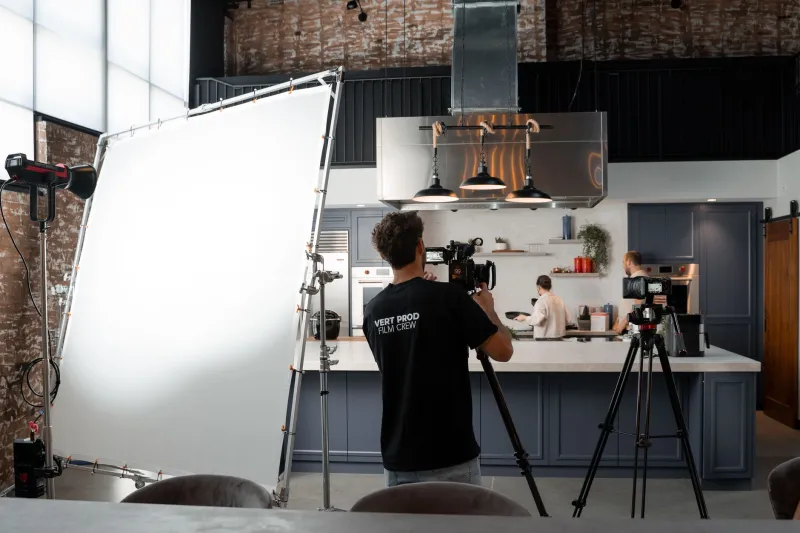
To understand why established culinary television personalities are stepping back from network arrangements, one must first reckon honestly with the nature of food television itself. The medium demands a particular performance: consistency, accessibility, and above all, visual spectacle. Dishes must photograph beautifully under studio conditions. Personalities must remain engaging across dozens of episodes. The chef, in many cases, becomes less a craftsperson and more a character — reliable, reproducible, and carefully managed.
For chefs whose identities are rooted in creative restlessness, this arrangement grows constraining. The editorial demands of network programming — the need to simplify techniques for broad audiences, to avoid ingredients that might alienate sponsors, to sustain a brand identity episode after episode — can calcify a culinary voice rather than liberate it. Several prominent figures have described, in candid moments, a growing disconnect between the food they present on screen and the food they actually want to cook.
Audience fatigue compounds the problem. American viewers, increasingly fluent in food culture thanks to decades of culinary programming, have become sophisticated enough to recognize when a chef's television persona has diverged from their genuine culinary philosophy. The polished finish that once signaled prestige now reads, to many, as artifice.
The Economics of Intimacy
Beyond creative dissatisfaction, there is a compelling financial logic to the supper club model that deserves serious examination. Network television, despite its cultural visibility, does not necessarily translate into the most favorable economic arrangement for the chef as an individual. Licensing agreements, production company involvement, network oversight, and the costs associated with maintaining a public brand infrastructure all reduce the chef's actual share of the value being generated.
The invitation-only dining model, by contrast, operates on principles of radical directness. When a celebrated chef hosts twenty guests at a private residence or discreet venue, charging several hundred dollars per seat for a multi-course experience, the revenue flows with considerably fewer intermediaries. More importantly, the chef retains complete creative authority — over the menu, the pacing, the sourcing, the atmosphere, and the guest list itself.
This direct-to-consumer dynamic is not unlike the shift that has reshaped other creative industries. Musicians who once depended on major label distribution now cultivate direct relationships with audiences through streaming platforms and intimate live events. Authors build subscription communities. The underlying principle is identical: proximity to the audience, combined with the elimination of institutional gatekeepers, produces both greater creative freedom and a more sustainable economic foundation.
What the Guest List Reveals
The exclusivity of the underground supper club is not incidental — it is integral to the experience. These gatherings attract a specific kind of food enthusiast: one who is less interested in the theater of celebrity and more invested in genuine culinary dialogue. Guests at these events are frequently food professionals, serious collectors, industry figures, and deeply knowledgeable amateurs who can engage with a chef's intentions on a sophisticated level.
This self-selecting audience fundamentally changes the nature of the interaction. A chef cooking for twenty guests who have actively sought out the experience — who have passed through a waiting list, accepted an unusual venue, and committed to a prix-fixe menu without knowing its contents — is not performing for an imagined viewer demographic. The feedback loop is immediate, personal, and unmediated by ratings metrics or focus group data.
For chefs who spent years calibrating their television presence to reach the broadest possible American audience, this intimacy can feel revelatory. The supper club format rewards the very qualities that network programming tends to suppress: obscurity, difficulty, provocation, and the willingness to serve something that might genuinely challenge a guest's expectations.
The Gatekeeping Question
The rise of chef-led supper clubs raises uncomfortable questions about access and equity that the culinary world cannot entirely sidestep. If the most compelling culinary experiences are increasingly available only to those with the right connections and disposable income, what does that mean for the democratizing promise that food television once represented?
It is a tension worth acknowledging without easy resolution. The underground dining movement, for all its creative vitality, is not a public forum. Its pleasures are, by design, rationed. The chefs who have departed from network television may be reclaiming their artistic integrity, but they are doing so within a context that privileges a relatively narrow segment of the American dining public.
Yet it would be reductive to frame this shift purely as retreat into elitism. Many of the chefs now operating in the supper club world maintain parallel public presences — through social media, occasional pop-up events, culinary partnerships, and published work — that extend their influence beyond the guest list. The supper club, in this reading, functions less as a replacement for public engagement and more as a laboratory: a protected space where ideas can be developed before they eventually reach wider audiences through other channels.
A New Grammar for Culinary Entertainment
What the underground supper club movement ultimately suggests is that the relationship between culinary talent and its audience is undergoing a structural renegotiation. The broadcast model — in which a chef's vision is filtered through production companies, network executives, and advertising partners before reaching viewers — is no longer the only viable architecture for culinary entertainment.
For platforms and publications devoted to the intersection of food and television, this evolution presents both a challenge and an invitation. The most interesting culinary conversations are no longer happening exclusively on screen. They are happening in borrowed dining rooms, in converted warehouses, at tables set for twenty. Covering that world with the same seriousness brought to network programming is not a departure from gourmet entertainment — it is an expansion of what gourmet entertainment can mean.
The chefs who have made this transition are not abandoning their audiences. They are, in many respects, finally cooking for them.