The Price of the Plate: Decoding the Financial Architecture Behind Premium Cooking Television
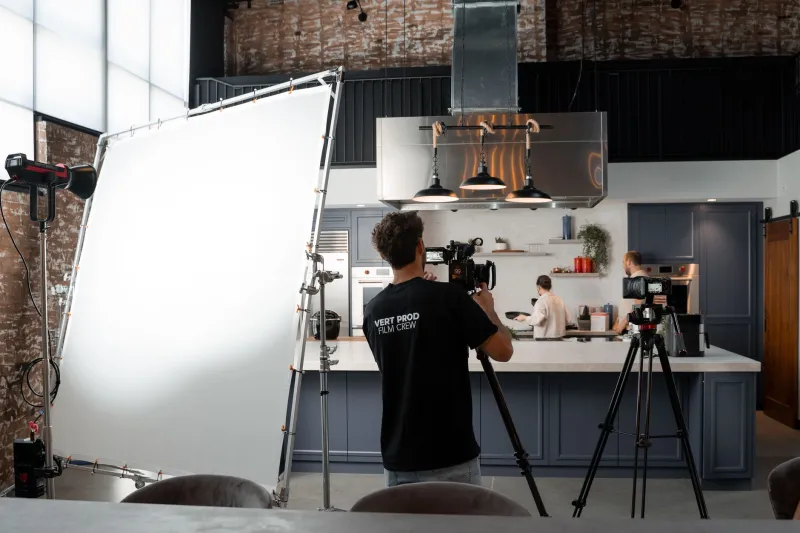
When a celebrated chef stands before a camera in a gleaming kitchen, describing the provenance of a heritage-breed pork shoulder or the precise technique required to achieve a perfect maillard reaction, the impression is one of effortless authority. The set is immaculate. The lighting is flattering. The narrative arc is confident and clear. What the camera does not show — what it is specifically designed not to show — is the months of financial negotiation, creative compromise, and audience-metric analysis that made that moment possible.
Premium culinary television is an expensive proposition. Understanding the economics behind it is not merely a matter of industry curiosity. It is, increasingly, the key to understanding which chef stories get told, which culinary traditions receive sustained attention, and what the future of sophisticated food programming in America is likely to look like.
The True Cost of a Single Episode
Producing a single episode of a high-end cooking show in the United States carries costs that would surprise most viewers. Location shoots at working restaurants or farms, travel for production crews, licensing fees for music, post-production color grading, and the fees commanded by established culinary talent can collectively push the per-episode budget of a premium series well into six figures — and in some cases, significantly beyond.
For context, a modestly produced episode of a food documentary series might be completed for $150,000 to $250,000. A network-quality cooking competition with name-brand judges, elaborate set construction, and a full post-production suite can exceed $1 million per episode. The gap between these figures is not merely a difference in production value; it is a difference in the kinds of stories that can be responsibly told. A shoestring budget does not accommodate three days of shooting in the Louisiana bayou to establish the cultural context of a chef's Creole heritage. It does not allow for the archival research and animation sequences that might bring the history of a culinary tradition to life on screen.
"Every creative decision is also a financial decision," one veteran food television producer explained in a recent conversation. "When you're sitting in a budget meeting, you're not just talking about money. You're talking about which parts of the story you can actually afford to tell."
Sponsorship, Integration, and the Question of Editorial Independence
In the current media landscape, very few culinary programs are funded entirely by a network or streaming platform. The gap between what a commission covers and what a production actually costs is routinely filled by brand sponsorship — and the terms of that sponsorship have direct implications for the content that appears on screen.
In its most transparent form, brand integration in food television is relatively benign: a particular brand of cookware appears prominently on the counter, a specific olive oil is used in a demonstration, a car brand sponsors the travel segments of a globe-trotting chef series. Viewers have grown accustomed to these arrangements, and most production companies maintain clear editorial policies designed to protect the integrity of their programming.
But the pressures are real, and they compound. A program that relies heavily on a single category sponsor — a wine brand, a kitchen appliance manufacturer, a grocery delivery service — must navigate the tension between authentic editorial voice and the expectations of a partner whose investment is not entirely disinterested. The most skilled executive producers are those who can honor both obligations simultaneously, ensuring that sponsorship enhances rather than distorts the culinary narrative.
Streaming platforms have introduced a different set of financial dynamics. Services that operate on subscription models rather than advertising revenue have, in theory, more latitude to fund ambitious, uncommercial content. In practice, the pressure to demonstrate viewership metrics — completion rates, subscriber acquisition, social media engagement — has created its own form of editorial constraint, one that can be just as consequential as a sponsor's preferences.
Metrics, Algorithms, and the Stories That Get Greenlit
The decision to greenlight a culinary series is no longer made purely on the basis of a compelling pitch and a charismatic chef. Data has become a central participant in the commissioning process, and its influence on the diversity and ambition of food programming deserves serious scrutiny.
Streaming platforms in particular rely on viewing data to project the likely performance of a proposed series before a single frame has been shot. Historical data on comparable programs, demographic information about existing subscribers, and predictive modeling based on a chef's existing social media footprint all feed into commissioning decisions that were once made on the basis of creative instinct and editorial judgment.
The consequences of this shift are visible in the kinds of culinary programs that have proliferated in recent years: formats that replicate the proven success of earlier hits, chefs who arrive with pre-built audiences, and concepts that fit neatly into established genre categories. The genuinely original culinary vision — the program that does not resemble anything currently performing well in the data — faces a structural disadvantage that has nothing to do with its creative merit.
"The algorithm is not hostile to great food television," observed one development executive at a major streaming platform. "But it is indifferent to it. It responds to what has already worked, not to what might work if given the chance."
What Chefs Sacrifice to Reach the Screen
For the culinary talent at the center of these negotiations, the financial architecture of television production can impose constraints that extend well beyond creative preference. Chefs who agree to host or appear in sponsored programming may find their public identity shaped by associations they did not fully anticipate. Those who work with platforms that retain significant editorial control over their content may discover that the version of their story that reaches viewers is a curated approximation of the story they intended to tell.
In conversations with chefs who have navigated this landscape, a common theme emerges: the importance of understanding, before signing anything, exactly whose creative vision will ultimately govern the finished product. The most successful culinary television personalities are those who have developed the business literacy to engage with production contracts, sponsorship terms, and platform agreements as the consequential documents they are — not as administrative details to be delegated while the real work of cooking continues elsewhere.
The Case for Sustainable Culinary Ambition
None of this is to suggest that the financial pressures of food television production inevitably corrupt the final product. Some of the most cinematically accomplished and narratively sophisticated culinary programming of the past decade has been produced within the constraints of tight budgets and demanding platform relationships. Resourcefulness, it turns out, is its own form of creative discipline.
But the conversation about economics matters precisely because it is so rarely had in public. The audiences who watch premium cooking shows — and who, at their best, bring genuine curiosity and culinary sophistication to the experience — deserve to understand the conditions under which that content is made. Transparency about the financial architecture of food television is not a diminishment of the art form. It is a form of respect for the viewers who sustain it.
The plate, after all, does not arrive at the table without a kitchen behind it. And the kitchen, it turns out, has a budget.