Roots, Soil, and the Screen: How America's Regional Food Traditions Are Claiming Their Place in Gourmet Television
For most of gourmet television's history, sophistication carried a particular accent. It spoke in French culinary terms, plated with architectural precision, and measured achievement against the standards of European tradition. Regional American cooking—the slow-smoked brisket of Central Texas, the rice-based Lowcountry stews of coastal South Carolina, the wild mushroom foraging culture of the Pacific Northwest—occupied a secondary tier, treated as charming folk tradition rather than serious culinary expression. That posture is changing, and the shift carries significant implications for both the industry and the audience it serves.
Streaming platforms, in particular, have recognized that regional authenticity offers something their competitors cannot easily replicate: a sense of place so specific and so deeply rooted that it functions as its own form of distinction. In a marketplace crowded with competition programs and celebrity-driven formats, the irreplaceable quality of genuine regional food culture has become a meaningful programming asset.
The Geography of Culinary Legitimacy
The question of which American food traditions receive serious television treatment has never been purely aesthetic. It reflects assumptions about cultural value, economic geography, and the demographics of who controls editorial decisions. For years, programming gravitating toward fine dining meant gravitating toward New York, San Francisco, and Chicago—cities with established critical infrastructure and recognizable names attached to marquee restaurants.
What that framework consistently obscured was the extraordinary depth of culinary knowledge embedded in regions that rarely generated national press coverage. The Gullah Geechee food traditions of the Sea Islands, preserving West African agricultural and culinary practices across centuries, represent a living archive of American history that no tasting menu at a Manhattan restaurant can approximate. The fermentation traditions of Appalachia, the chile-roasting culture of New Mexico, the smoked fish preparations of the Great Lakes—each constitutes a culinary grammar developed over generations in response to specific landscapes, specific communities, and specific histories.
Gourmet programming that engages these traditions seriously is not simply broadening its geographic scope. It is reconsidering the very definition of culinary mastery.
Streaming's Appetite for Authenticity
The economics of streaming have accelerated this shift in meaningful ways. When a platform must differentiate itself across thousands of competing titles, the specificity of a show set in the oyster beds of the Chesapeake Bay or the persimmon orchards of the Ozarks becomes a genuine programming advantage. Viewers who have never encountered these food cultures approach them with curiosity; viewers who grew up within them approach them with the particular satisfaction of recognition—of seeing their own tables reflected in a medium that long ignored them.
Several recent productions have demonstrated the commercial and critical viability of this approach. Programming that follows indigenous chefs reconnecting with pre-colonial food systems in the Southwest, or that documents the multigenerational pitmaster families of Alabama, has attracted both awards attention and subscriber engagement that purely technique-driven formats struggle to generate. The narrative architecture of regional cuisine—its entanglement with migration, resistance, seasonal cycles, and community ritual—provides the kind of human storytelling that sustains viewer investment across an entire series.
Which Regions Remain Underrepresented
Progress, however, has been uneven. Certain regional food cultures have achieved genuine breakthrough visibility on the gourmet screen, while others remain almost entirely absent from premium programming. The Lowcountry and Gulf Coast have benefited from a sustained wave of critical attention, partly driven by the broader national conversation around Southern food's African American roots. Pacific Northwest foraging culture has found a receptive audience among viewers already primed by the farm-to-table movement. Texas barbecue has accumulated enough national mythology to sustain multiple dedicated productions.
Less visible are the culinary traditions of the Upper Midwest—the Scandinavian and Eastern European immigrant foodways woven into the cooking of Minnesota and Wisconsin, the wild rice culture of the Ojibwe people, the fish fry traditions that anchor community life across the Great Lakes region. Appalachian food, despite scattered moments of recognition, remains largely filtered through a poverty narrative that flattens its genuine complexity. The food cultures of the Mountain West, the High Plains, and the borderland communities of South Texas have received only glancing treatment from programming that still tends to equate sophistication with coastal geography.
The absence is not merely a representational oversight. It reflects a genuine gap in the culinary knowledge available to American viewers who might otherwise discover that the seed-saving traditions of rural Kentucky or the communal feast cultures of the Northern Plains constitute forms of culinary intelligence as rigorous and as worthy of serious documentation as any tasting menu.
The Challenge of Authentic Representation
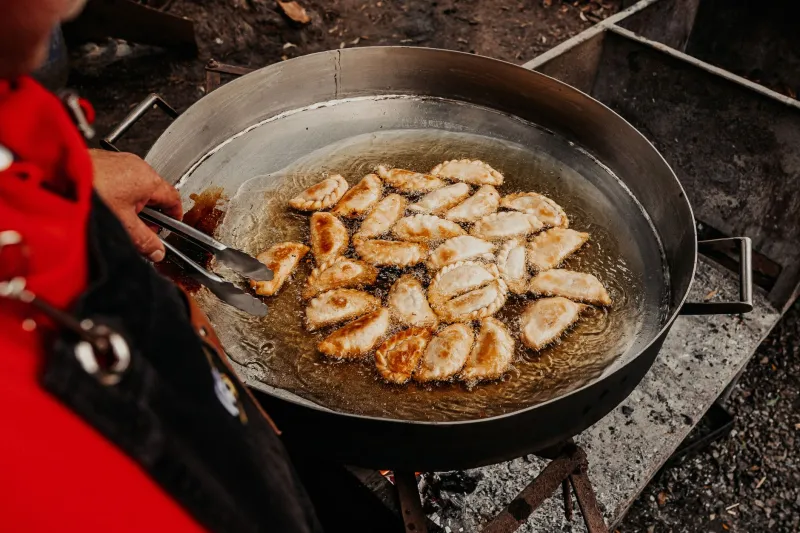
Documenting regional food culture on television carries its own set of editorial responsibilities. The history of food media is littered with productions that extracted the visual appeal of a regional tradition while stripping away the social and historical context that gives it meaning—presenting, for instance, the aesthetic of a Louisiana crawfish boil without the Cajun Creole history that produced it, or the imagery of a Navajo frybread without acknowledging the federal policies that created the conditions for its emergence.
Premium gourmet programming that takes regional cuisine seriously must resist the temptation to reduce complex food cultures to picturesque backdrops. The most compelling productions in this space have succeeded precisely because they treat their subjects as authorities rather than subjects—allowing the cooks, farmers, fishermen, and community members who carry these traditions to speak with full complexity about what their food means and where it comes from.
This is not simply an ethical imperative. It is an editorial one. Audiences capable of appreciating the nuances of regional cuisine are also capable of detecting when a production has traded depth for atmosphere, and they respond accordingly.
A New Map of American Culinary Excellence
What the best regional cooking programming ultimately offers is a renegotiation of the map by which American culinary excellence is measured. When a gourmet series devotes genuine attention to the craft of a third-generation rice farmer in the Arkansas Delta, or the fermentation knowledge of a Korean American chef drawing on both her grandmother's kimchi traditions and the wild grape harvest of upstate New York, it expands the vocabulary available to American food culture as a whole.
The terroir of American cuisine—its deep entanglement with specific soils, specific histories, and specific communities—is among the most compelling stories the gourmet screen has yet to tell in full. The productions beginning to tell it are not merely filling a geographic gap in the programming landscape. They are redefining what it means to take American cooking seriously.