When the Soufflé Falls: The Unexpected Power of Culinary Mishaps in Gourmet Television
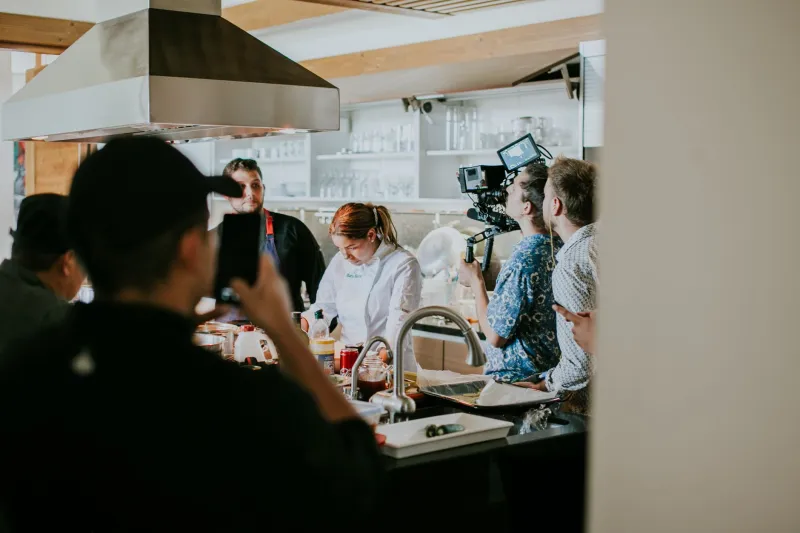
There is a particular kind of silence that descends upon a television kitchen when something goes wrong. A sauce breaks irreparably. A soufflé, labored over with meticulous care, emerges from the oven as a sunken, defeated disk. A chef reaches for saffron and finds an empty jar. In that suspended moment — before the recovery, before the explanation, before the camera cuts away — something genuinely rare occurs on the gourmet screen: the truth.
For a medium that has long trafficked in aspirational perfection, the accidental revelation of fallibility carries a weight that no amount of careful production design can manufacture. And yet, the culinary television industry has historically treated these moments as liabilities rather than assets, editing them into oblivion before an audience ever has the chance to witness them. The question worth asking in 2024 is whether that instinct is not merely misguided, but actively working against the very connection that distinguishes memorable food programming from forgettable content.
The Architecture of Polished Perfection
American cooking television was built, in many respects, on the premise of mastery. From the earliest instructional programs to the elaborate competition formats that define the contemporary landscape, the implicit contract between host and viewer has been one of demonstrated expertise. Producers invest considerable resources — in lighting, in editing, in multiple takes — to ensure that what reaches the screen reflects an idealized version of culinary craft.
This is entirely understandable. Gourmet programming, in particular, carries an obligation to its subject matter. When a Michelin-caliber chef walks viewers through the construction of a classical French sauce, there is genuine educational value in seeing it executed correctly. Technique matters. Precision matters. The integrity of the craft demands a certain fidelity to the intended result.
And yet, the pursuit of seamless execution has produced a curious side effect: a viewing experience that can feel, at its worst, more like a product demonstration than a human encounter. When every emulsification holds, every tempering succeeds, and every presentation emerges from the pass looking precisely as it was conceived, the viewer is left admiring competence from a respectful distance rather than engaging with the cook as a person.
What Failure Actually Communicates
Consider what happens, by contrast, when something goes wrong and the camera stays. The chef who watches a beurre blanc split and must make a rapid, visible decision about how to proceed is no longer performing mastery — they are demonstrating something arguably more instructive: the capacity for composed problem-solving under pressure. The home cook watching from a couch in Cincinnati or Portland recognizes that experience immediately. They have been there. Perhaps not in a professional kitchen, but in their own, on a Tuesday evening, with guests arriving in forty minutes.
This is the mechanism through which imperfection generates intimacy. It is not that audiences take pleasure in watching skilled professionals struggle. Rather, the moment of difficulty creates a shared reference point — a common language between the person on screen and the person watching — that polished execution, however beautiful, simply cannot replicate.
Research into audience engagement consistently suggests that parasocial connection, the sense of genuine relationship that viewers develop with television personalities, deepens significantly when those personalities are perceived as authentic rather than constructed. In the context of food programming, authenticity is most legibly communicated not through the perfect dish, but through the honest moment.
The Production Dilemma
For the teams who make gourmet television, the decision of whether to preserve a culinary mishap is rarely straightforward. There are practical considerations: does the error undermine the educational purpose of the segment? Does it reflect poorly on a chef whose professional reputation the program has a responsibility to protect? Does it disrupt the narrative arc that the episode has been constructed to deliver?
These are legitimate concerns, and they explain why the instinct to cut is so deeply ingrained in production culture. A fallen soufflé in a segment designed to teach the technique is, on one reading, a pedagogical failure. It tells the viewer what not to do without necessarily illuminating why, or how to recover.
But there is a compelling counter-argument, and it is one that the most thoughtful producers in the industry are beginning to take seriously. The deliberate preservation of a culinary mishap — handled with editorial care, contextualized by the chef's response, and framed as part of a larger narrative about the realities of working with living ingredients and unpredictable conditions — can elevate a program rather than diminish it. It signals to the audience that what they are watching is real, that the kitchen environment is genuinely dynamic, and that the chef they are watching is a practitioner rather than a performer.
Some of the most discussed moments in recent food television history have been precisely these unscripted ruptures. A celebrated chef openly acknowledging a misjudgment in seasoning. A pastry component that refuses to set, forcing an improvised rethinking of the entire plate. These moments are remembered long after technically flawless episodes have faded from memory.
Vulnerability as a Gourmet Value
There is a cultural dimension to this conversation that is worth acknowledging. American food culture has undergone a significant democratization over the past two decades. The rise of home cooking as a serious pursuit, the proliferation of farmers markets and artisan producers, and the broader movement toward understanding food as craft rather than commodity have all contributed to an audience that approaches gourmet programming with genuine sophistication.
That audience is not easily impressed by perfection alone. They have watched enough cooking television to recognize the editorial conventions that produce it. What they respond to — what generates the word-of-mouth enthusiasm and the devoted viewership that defines a successful food program — is the sense that they are being let into something real.
Vulnerability, in this context, is not a weakness to be hidden. It is a gourmet value in its own right. The chef who can be honest about the moment a dish did not cooperate, who can articulate the sensory judgment required to salvage or abandon a preparation, is offering the viewer something that no amount of technical perfection can provide: genuine insight into the living, responsive nature of cooking itself.
A Case for Keeping the Camera Rolling
The most persuasive argument for preserving culinary mishaps in gourmet television is ultimately a simple one. Cooking, at every level of sophistication, is an encounter with uncertainty. Ingredients vary. Ovens behave unpredictably. The margin between a transcendent sauce and a broken one can be a matter of seconds or degrees. To edit that uncertainty out of the frame is to misrepresent the very thing that makes culinary craft so endlessly compelling.
Production teams who find the courage to keep the camera rolling — and to trust their audiences with the unvarnished complexity of what they are watching — may discover that the fallen soufflé is not a liability at all. It is, in fact, the most honest thing in the room.