Ordered Bowls, Disordered Truth: How Gourmet Television Has Turned Prep Work Into Performance
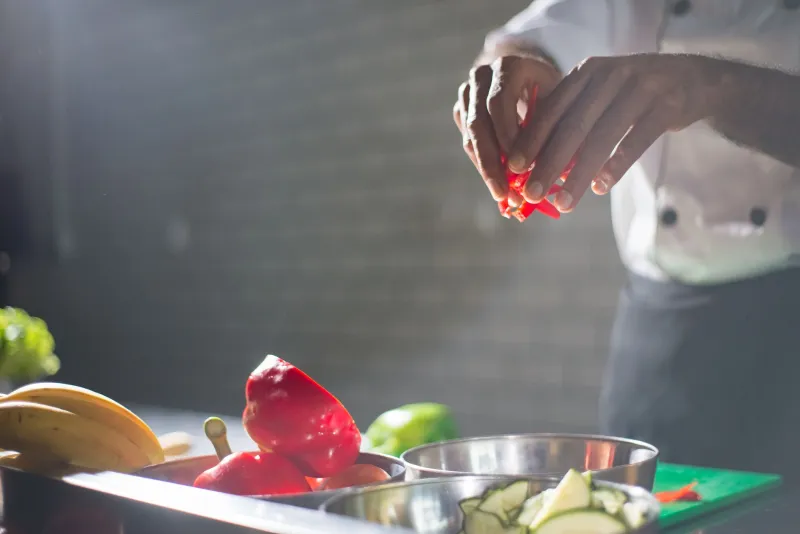
There is a particular moment that appears, with near-religious consistency, across American gourmet cooking programs. The chef — poised, unhurried, impeccably composed — gestures toward a gleaming expanse of small white ramekins, each cradling a precisely measured ingredient. Julienned herbs rest beside calibrated pools of olive oil. Spice blends occupy their own ceramic alcoves, color-coordinated with an almost painterly intention. The camera lingers. The host exhales something reverential. And the viewer, absorbing this tableau, arrives at a quiet but consequential misunderstanding: that this is what professional cooking preparation actually looks like.
It is not.
The Stage Before the Stage
Mise en place — the French phrase meaning "everything in its place" — is, at its core, a mental philosophy before it is a physical practice. In professional kitchens, it describes not merely the arrangement of prepped components but an entire cognitive architecture: the anticipation of sequencing, the internalization of timing, the rehearsal of decisions before service pressure makes deliberate thought impossible. It is the professional cook's way of thinking ahead so thoroughly that execution can proceed almost on instinct.
What gourmet television has done, with considerable visual sophistication, is extract the physical artifact of this philosophy — the small bowls, the arranged components — and present it as the philosophy itself. The result is a kind of mise en place theater, one that communicates orderliness and competence without illuminating the far more demanding intellectual work that those orderly bowls are meant to support.
This distinction matters enormously, and yet it is almost never examined on screen.
When Aesthetics Override Accuracy
The reasons for this substitution are not difficult to identify. Television, as a medium, is fundamentally visual. It rewards the legible and the beautiful over the abstract and the complex. A chef explaining the mental calculus behind timing a multi-course service — the invisible negotiations between heat, protein behavior, sauce reduction, and table readiness — offers the camera nothing to rest upon. A row of color-coordinated ramekins, bathed in warm studio light, offers everything.
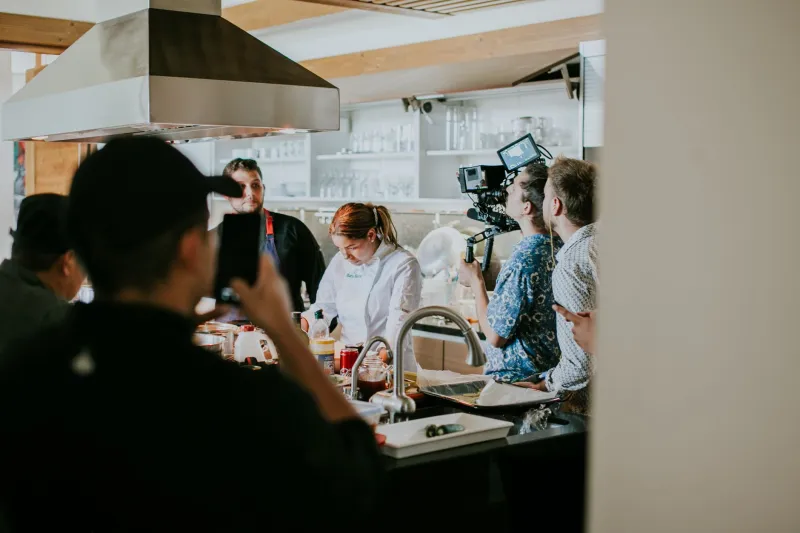
Production designers and directors of photography on premium culinary programs understand this implicitly. Ingredients are pre-measured not merely for convenience but for visual rhythm. Colors are selected and sequenced to create compositions that feel balanced and aspirational. The prep station becomes, in effect, a still life — one that communicates abundance, control, and expertise through purely visual means.
The difficulty is that this visual grammar, however seductive, teaches the wrong lesson. It implies that mastery is primarily a matter of organization, that the path to gourmet cooking runs through perfectly labeled containers and symmetrically arranged cutting boards. For the significant portion of the American viewing audience that approaches these programs as genuine culinary education, this is a quietly damaging fiction.
The Improvisation That Never Appears on Screen
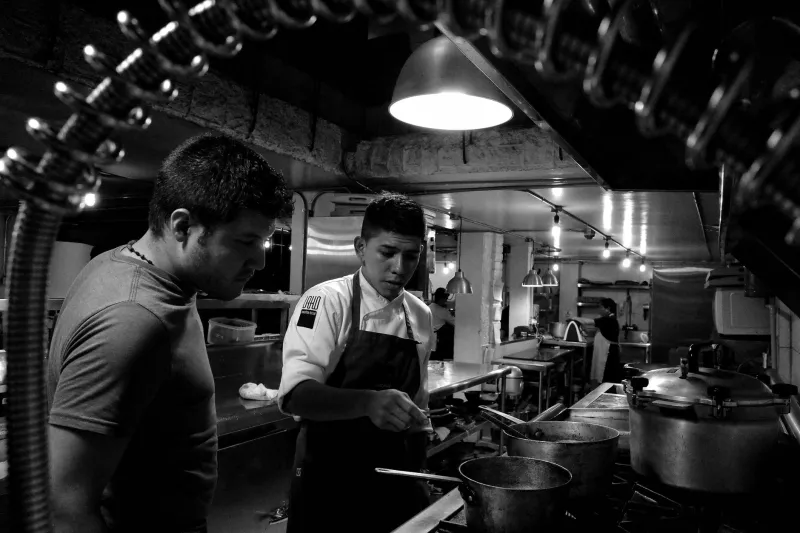
Professional chefs — the kind whose work gourmet television ostensibly celebrates — will readily describe a relationship with preparation that looks almost nothing like what appears on screen. Real mise en place in a working kitchen is often incomplete, perpetually revised, and subject to the pressures of what actually arrived on the delivery truck that morning. A sauce component runs short. A garnish wilts unexpectedly. A protein behaves differently than anticipated because of a variation in its age or fat content.
The response to these conditions is not the calm rearrangement of ramekins. It is rapid, experience-driven improvisation — the kind of intuitive problem-solving that emerges only from years of accumulated culinary knowledge. This capacity, arguably the most defining characteristic of genuine culinary mastery, is precisely what the mise en place aesthetic conceals. By presenting preparation as a solved, static, visually harmonious state, cooking programs eliminate from view the very quality that separates a skilled professional from an organized amateur.
Chef educators at institutions such as the Culinary Institute of America and Johnson & Wales have noted, with some frustration, that students arriving from a diet of premium cooking television often possess sophisticated visual vocabularies around food presentation while harboring surprisingly shallow understandings of how professional kitchens actually function under pressure. The mise en place illusion, it appears, reaches further than the living room.
A Different Kind of Preparation Story
This is not an argument against visual elegance in food programming. Gourmet television's capacity to make cooking beautiful and aspirational has introduced millions of Americans to culinary traditions, ingredients, and techniques they might never otherwise have encountered. That contribution is genuine and should not be casually dismissed.
The argument, rather, is for a more honest and ultimately more interesting preparation narrative — one that treats mise en place as the beginning of a cognitive story rather than its conclusion. What would it mean for a program to show a chef not merely arranging components but articulating the decisions embedded in that arrangement? To reveal why a particular element was prepped to a specific size, how that choice relates to a cooking time, how that cooking time connects to a service sequence, and how that entire sequence exists in the chef's mind as a dynamic, adjustable plan rather than a fixed script?
Such programming would be more demanding of its audience. It would require viewers to engage with cooking as a discipline of thinking rather than a discipline of arrangement. But it would also be far more truthful, and — for the genuinely curious viewer — far more rewarding.
The Responsibility of the Gourmet Frame
Programs that position themselves within the gourmet tradition carry an implicit promise: that they will illuminate culinary craft at its most sophisticated. When those programs reduce mise en place to a visual motif — however elegantly executed — they fall short of that promise in a specific and consequential way.
The small white bowls are not the point. They never were. They are the visible residue of an invisible process: the disciplined, experience-saturated mental preparation that allows a professional chef to move through complexity with apparent ease. Showing the bowls without the thinking that produced them is like broadcasting a concert while muting the music — impressive to observe, but fundamentally silent on the matter that most deserves to be heard.
Gourmet television, at its finest, has the capacity to close that gap. The question is whether the industry possesses the creative courage — and the faith in its audience — to try.