Scrolling Toward the Spotlight: When Viral Food Creators Arrive at the Gourmet Television Table
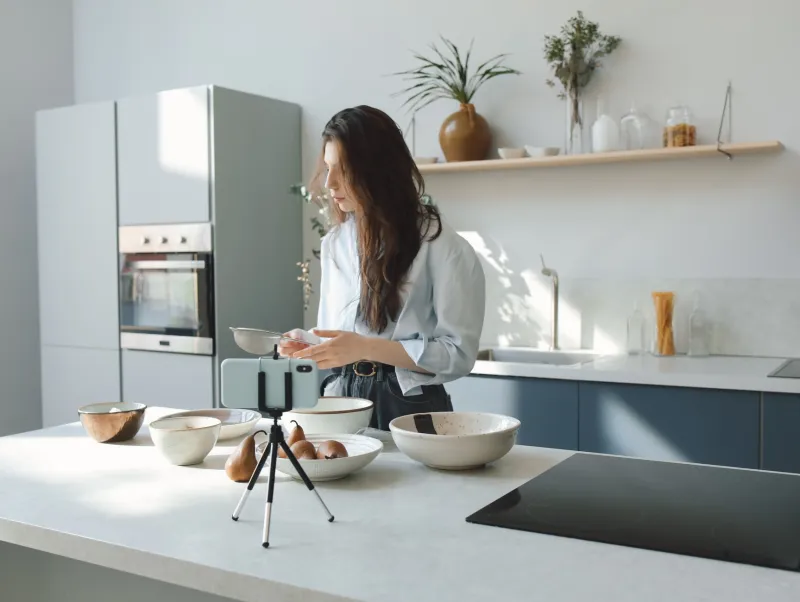
There is a moment that several food creators who have made the leap from social media to traditional television describe in strikingly similar terms. It arrives during the first day on a professional set — surrounded by a full crew, under lights calibrated by a director of photography, with a showrunner waiting for a take that can be used. For someone accustomed to propping a smartphone against a stack of cookbooks in their own kitchen, that moment is, by most accounts, quietly terrifying.
Yet these transitions are happening with increasing frequency. Networks, streaming platforms, and production companies across the United States have spent the past several years watching digital audiences aggregate around a new kind of culinary personality — self-taught cooks, heritage recipe preservationists, technique evangelists, and flavor adventurers who built devoted communities one short video at a time. The industry has drawn a logical conclusion: if the audience is already there, the programming opportunity is substantial.
The Scouting Pipeline Has Changed
Talent acquisition in culinary television once operated through a relatively predictable channel. Producers attended food festivals, monitored culinary school graduations, and maintained relationships with restaurant publicists. The occasional home cook broke through via competition formats, but the pipeline from kitchen to screen was long and heavily gatekept.
Social media has fundamentally disrupted that model. A creator who posts consistently engaging food content across TikTok and Instagram now arrives at a network conversation with something that previously required years to establish: proof of audience. Engagement analytics, follower demographics, and completion rates on short-form videos provide producers with data points that were once entirely unavailable before a pilot was commissioned.
Established formats have responded accordingly. MasterChef and its various iterations have made visible efforts to incorporate talent with digital backgrounds, both as contestants and, more recently, as personalities integrated into the broader franchise ecosystem. Food Network has conducted deliberate outreach to creators whose content aligns with its programming identity. The scouting meeting that once required a restaurant reservation now sometimes begins with a DM.
The Adaptation Challenge Is Real
For all the advantages that social media celebrity confers, the transition to gourmet television demands a set of skills that viral success does not automatically cultivate. This is a point that several creators who have navigated the transition are willing to discuss with candor.
The compression of short-form content is both its greatest strength and its most limiting constraint. A TikTok video that lands with precision in forty-five seconds has been edited to remove every moment of uncertainty, every pause, every imperfection. Television — and particularly the kind of long-form culinary documentary or instructional programming that occupies the prestige tier — requires something fundamentally different. It requires a creator who can sustain presence, develop a thought across twenty minutes, and allow the camera to observe them in unscripted moments without the safety net of post-production compression.
Production standards present a parallel challenge. The aesthetic of authenticity that performs well on social media — slightly imperfect lighting, a conversational register, the visible texture of a home kitchen — does not always translate to a broadcast or streaming environment where audiences have been conditioned by Chef's Table-level cinematography. Creators who have built their identity around accessibility must navigate the tension between maintaining that authenticity and meeting the visual expectations of a premium platform.
When the Transition Works
The success stories are instructive precisely because they reveal what the transition requires. Creators who have moved most effectively into traditional television formats tend to share several characteristics. They possess a genuine point of view that extends beyond recipe execution — a cultural perspective, a personal narrative, or a technical philosophy that can sustain extended storytelling. They demonstrate an ability to receive direction without interpreting it as a threat to their creative identity. And they bring to the professional set a work ethic shaped by the relentless output demands of social media, which tends to impress crews accustomed to more deliberate production rhythms.
Several creators who began their careers documenting regional American food traditions on Instagram have found particular success in the documentary-adjacent format, where their established relationship with a subject matter community provides narrative access that a traditional television crew could not easily replicate. In these cases, the creator's digital identity becomes an asset rather than a liability — the audience follows them into a longer format because the trust has already been established.
What Audiences Are Actually Asking For
The deeper question beneath all of this is whether audiences for gourmet television have genuinely expanded their definition of who belongs on the prestige screen, or whether they are simply tolerating the arrival of digital talent while waiting to see whether it meets an existing standard.
The evidence suggests something more interesting than either of those possibilities. Viewers who discovered culinary content through social media and subsequently sought out more substantial programming represent a genuine new audience segment for premium food television — one that arrived with different aesthetic expectations and a different relationship to the personalities on screen. They are accustomed to direct address, to the sense that the person cooking is speaking specifically to them, and they carry that expectation into longer-form viewing.
This is reshaping, however gradually, what sophisticated culinary programming looks like. The formal distance that once characterized prestige food television — the sense that one was observing a master at work from a respectful remove — is giving way, in some productions, to something warmer and more intimate. Whether that represents an enrichment of the form or a dilution of its standards is a question that producers, critics, and audiences are actively negotiating.
The Gourmet Standard Holds
What the most thoughtful observers of this transition agree upon is that the gourmet standard itself — the commitment to genuine culinary knowledge, to visual excellence, and to storytelling that honors the complexity of food as culture — remains the essential measure. Social media origin is neither a credential nor a disqualification. It is simply a new path to the table.
The creators who will endure in this space are those who understand that their audience's appetite for authenticity and their audience's appetite for excellence are not in conflict. They are, at their best, the same hunger.