A Table Set for One: The Demographic That Gourmet Television Has Left Hungry
The dinner party is, in many respects, the foundational fantasy of gourmet television. The long table, the gathered guests, the host moving between kitchen and dining room with practiced ease — this image has structured the aspirational logic of food programming for as long as the genre has existed. To cook at the level that premium television celebrates is, implicitly, to cook for others. Abundance is the medium through which sophistication is expressed.
It is a compelling image. It is also one that fails to reflect the daily reality of a substantial portion of the American population.
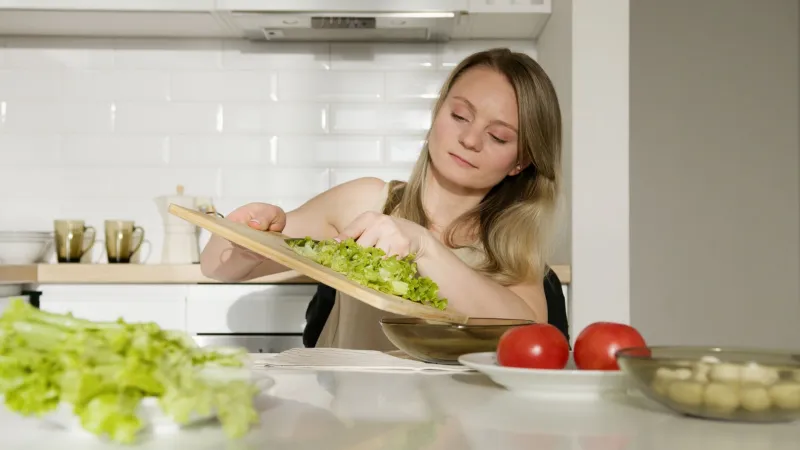
According to the most recent census data, approximately 29 percent of American households are single-person households. Add to that the significant number of couples and small households where one person does most of the cooking, often for an audience of one or two on any given weeknight, and the scale of the underserved audience becomes apparent. These are people who shop for one, who meal-plan for one, who have developed genuine culinary skill in service of a table that seats, most evenings, only themselves.
Gourmet television, by and large, has not made a serious effort to speak to them.
The Structural Bias Toward Scale
The reasons for this omission are partly aesthetic and partly institutional. From a production standpoint, cooking for a crowd is simply more visually dynamic. A roasting pan filled with a whole chicken surrounded by caramelized root vegetables reads differently on camera than a single chicken breast seared in a small skillet. The drama of volume — the steam rising from a large pot, the arc of a ladle over a wide bowl, the satisfying thud of a cleaver through a full rack of ribs — is genuinely compelling television.
There is also the matter of what gourmet programming has historically been selling. Cookware brands, specialty ingredient companies, and kitchen equipment manufacturers have long understood their target consumer as someone who entertains, who hosts, who uses their kitchen as a stage for social performance. The solo cook, preparing a careful meal for herself on a Tuesday evening, has not traditionally been the consumer these advertisers most wanted to reach.
The result is a genre that has systematically undervalued a form of cooking that is, in many ways, more demanding than the dinner party. Cooking well for one requires a different kind of discipline: the ability to scale recipes without losing their proportional logic, to manage ingredient freshness across a week of solo meals, to find satisfaction in the process itself rather than in the social reward of feeding others.
Voices Filling the Vacuum
In the absence of mainstream gourmet programming designed for the solo cook, a number of independent creators have built significant audiences by addressing this gap directly. Their work tends to appear on YouTube, on Substack, and on emerging streaming platforms rather than on established food networks — a distribution pattern that reflects both the economics of niche content and the relative conservatism of traditional broadcast gatekeepers.
What distinguishes the best of these creators is not merely that they scale their recipes down, but that they think through the entire experience of cooking alone with genuine intellectual rigor. They address the question of how to buy a bunch of fresh herbs when you only need two tablespoons, how to build a pantry that supports ambitious solo cooking without generating waste, how to treat a meal prepared for oneself as worthy of the same care and attention that a dinner party demands.
Several of these creators have backgrounds in professional kitchens, where cooking staff meals — often for a handful of people, often with limited resources — develops exactly the kind of inventive economy that solo home cooking requires. Their on-screen authority comes not from the spectacle of abundance but from the precision and intentionality with which they approach constraint.
A Conversation with the Solo Cook
For this feature, Gourmet Shows spoke with three culinary creators who have built their work around the single-person or small-household audience. Their observations, taken together, describe both the opportunity and the obstacles.
"The assumption I encounter constantly is that cooking for one is a temporary condition," said one creator, a trained pastry chef who pivoted to solo cooking content after years in restaurant kitchens. "Networks and producers treat it like something you do while you're waiting for your life to start. But for a lot of people, it's just their life. And it's a life that deserves real culinary engagement."
Another creator, whose channel focuses on elevated weeknight cooking for one using professional techniques, noted that the response from her audience consistently surprises collaborators and sponsors. "People assume the solo cook is looking for shortcuts, for quick and easy. But my most-engaged viewers are the ones who want to learn how to make a proper pan sauce, how to butcher a small piece of fish correctly, how to build flavor over time. They're serious cooks. They just happen to be cooking for themselves."
A third creator, who documents her experience cooking through the classical French repertoire in a single-person household, described the particular challenge of sourcing. "Half of my content is really about procurement — how do you buy the right quantities, how do you find a butcher who will sell you a single duck leg, how do you make a bottle of wine last across a week of cooking without losing it. These are real problems that gourmet television never addresses because it's always assuming you're feeding eight people."
What a Serious Platform Could Build
The market logic for premium solo cooking content is, upon examination, more compelling than the industry's current indifference would suggest. Single-person households tend to have higher per-capita discretionary income than large family households. They are disproportionately represented in urban markets. They are, on average, more likely to be active consumers of food media, restaurant culture, and specialty ingredients.
A premium cooking show designed explicitly for the sophisticated solo cook — one that treats the single-person kitchen as a site of genuine culinary ambition rather than domestic compromise — would not be addressing a marginal audience. It would be addressing one of the most economically attractive demographics in American food culture.
The question is not whether that audience exists. The question is whether the gourmet television industry, still in love with its dinner party fantasies, is prepared to set a serious place at the table for the viewer who arrives alone.