Velvet Ropes and Camera Lights: How Culinary Television Is Shrinking the Circle of Fine Dining
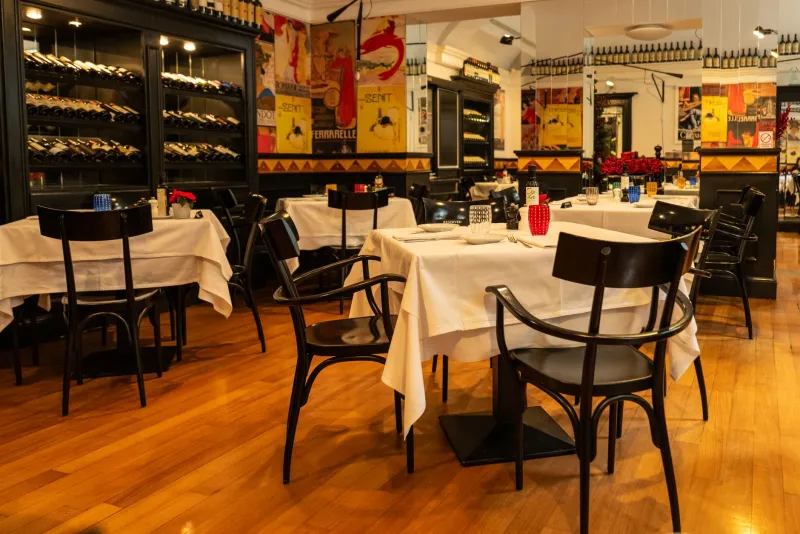
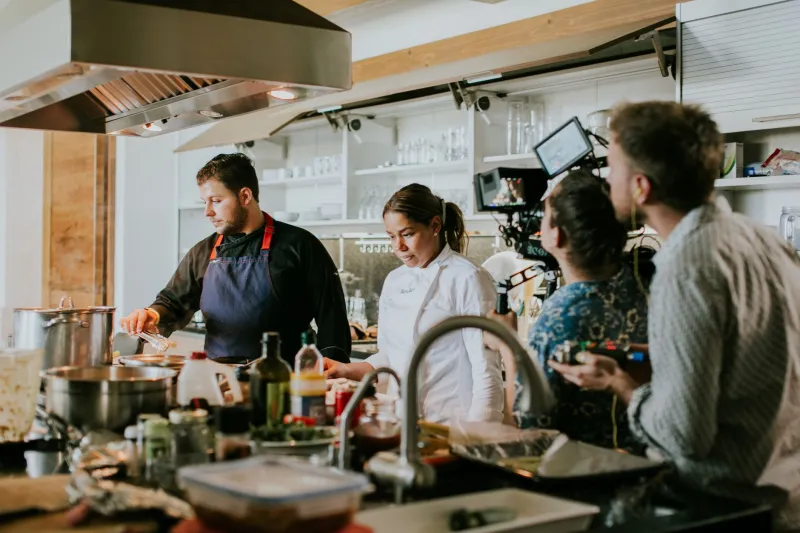
There is a particular kind of restaurant that exists today almost exclusively in two dimensions — on the screen of a streaming device and, for a fortunate few, at the end of a reservation waitlist that stretches across many months. These establishments are not simply popular. They have become cultural artifacts, elevated by the sustained attention of premium culinary television into something closer to institutions. And therein lies a paradox that the food entertainment world has been reluctant to examine with any candor.
Gourmet programming was once celebrated, at least in theory, as a vehicle for democratizing sophisticated food culture. The implicit promise was straightforward: bring the world's finest kitchens into living rooms across America, and the appreciation for culinary craft would spread accordingly. What has unfolded instead is a more complicated story — one in which visibility and accessibility have moved in opposite directions.
The Anatomy of the Television Halo
When a chef or restaurant receives sustained, flattering coverage on a prestige culinary platform, the effects on demand are immediate and, in many cases, permanent. Reservation systems at featured restaurants routinely collapse under the weight of sudden interest. Tasting menus that once carried modest price points are revised upward as the establishment's cultural cachet solidifies. The restaurant, in effect, graduates from a dining destination into a pilgrimage site.
This phenomenon — call it the television halo — is not new. What distinguishes the current moment is its intensity. Streaming platforms, with their global reach and algorithmic promotion, have amplified the halo effect to a degree that traditional broadcast food programming never could. A single multi-episode series built around a Chicago tasting room or a coastal California farm-to-table concept can generate years of sustained demand, concentrating fine dining influence into a remarkably small number of addresses.
The result is a landscape in which perhaps two dozen restaurants across the United States command a disproportionate share of the nation's fine dining conversation — and, critically, its dining dollars. For establishments outside this charmed circle, the challenge of attracting serious culinary attention has grown measurably steeper.
Who Is Actually Watching — and Who Is Actually Eating
The audience for premium culinary television in the United States is large, enthusiastic, and, by most available measures, quite unlikely to dine at the restaurants being celebrated on screen. Viewership data consistently reveals that gourmet programming attracts audiences whose household incomes span a wide range, but the restaurants receiving the most lavish coverage frequently operate at price points — often $250 to $600 per person before beverages — that place them firmly beyond the reach of the majority of that audience.
This is not, in itself, a crisis. Aspirational content has always been a legitimate category of entertainment. The difficulty arises when the programming presents itself not merely as entertainment but as a guide to a food culture that viewers are invited to participate in. The implicit suggestion that the American dining landscape is being enriched for everyone obscures the degree to which its most celebrated expressions are becoming less, not more, accessible.
Restaurateurs and hospitality professionals who operate outside the television spotlight have noted the downstream consequences with some frustration. When a handful of chef-driven destinations absorb the majority of the country's fine dining enthusiasm and expenditure, the middle tier of serious, independently operated restaurants — the backbone of American culinary culture in cities large and small — struggles to compete for attention, talent, and patronage.
The Reservation Economy and Its Discontents
Perhaps no development better illustrates the stratification that premium culinary television has accelerated than the rise of what might fairly be called the reservation economy. Platforms designed to manage bookings at high-demand restaurants have increasingly adopted features — premium access tiers, transferable reservations, concierge services available exclusively to members — that effectively assign a secondary market price to the experience of dining at a television-celebrated establishment.
In practical terms, securing a table at one of America's most-filmed restaurants may now require not only months of advance planning but also access to services that carry their own substantial fees. The democratizing promise of culinary entertainment has, in this context, produced something closer to its opposite: a tiered system in which the ability to participate in the food culture that television celebrates is itself a function of economic privilege.
It is worth noting that this outcome was not inevitable. Programming choices — which chefs receive extended narratives, which regional cuisines are framed as worthy of serious attention, which price points are treated as aspirational versus exclusionary — are editorial decisions made by producers and platform executives. Those decisions, compounded over seasons and series, have contributed materially to the geography of fine dining prestige in the United States.
A Different Kind of Influence
None of this is to suggest that culinary television lacks the capacity for broader, more equitable impact. Certain programs have demonstrated genuine commitment to surfacing chefs and culinary traditions that exist outside the established prestige economy — celebrating regional American cooking, immigrant food cultures, and self-taught practitioners whose work would otherwise receive little institutional recognition.
These productions represent a different model, one in which the camera functions as a tool of discovery rather than a mechanism for reinforcing existing hierarchies. Their viewership numbers are often modest by comparison to the flagship prestige series, but their influence on how Americans understand and value culinary diversity is arguably more durable.
The question for the gourmet entertainment industry, then, is not whether television can expand the definition of fine dining. It demonstrably can. The question is whether the economic incentives of premium programming — the pursuit of aspirational audiences, luxury brand partnerships, and the cultural authority that attaches to celebrating established prestige — will continue to outweigh the editorial impulse to do something more genuinely democratizing with the camera.
For now, the velvet rope and the camera light remain closely aligned. The restaurants that glow brightest on screen are, with few exceptions, the ones that recede furthest from the average viewer's plate.