The Sound Beneath the Sizzle: How Audio Design Is Elevating Gourmet Cooking Shows Into Culinary Drama
Close your eyes during almost any scene in a well-produced gourmet cooking show, and the audio alone will tell you something extraordinary is happening. The percussive crack of a knife through a fennel bulb. The low, rolling thunder of a reduction reaching its peak. The delicate, crystalline sound of finishing salt falling onto a piece of seared fish. These are not incidental sounds — they are carefully constructed acoustic events, shaped by skilled sound designers whose work is as deliberate and as artistically significant as anything the director of photography contributes.
And yet, sound design in culinary television remains one of the medium's most underappreciated disciplines. Audiences celebrate the cinematography, the plating, the charisma of the chef on screen. Rarely do they pause to consider why a particular episode felt so viscerally immersive, so genuinely tense, so unexpectedly moving. More often than not, the answer lives in the audio track.
The Architecture of Culinary Sound
Professional sound designers working in food television operate within a surprisingly complex acoustic landscape. A single kitchen scene may require the layered management of ambient kitchen noise, dialogue, the sounds of the cooking process itself, and an underlying musical score — all of which must coexist without any single element overwhelming the others.
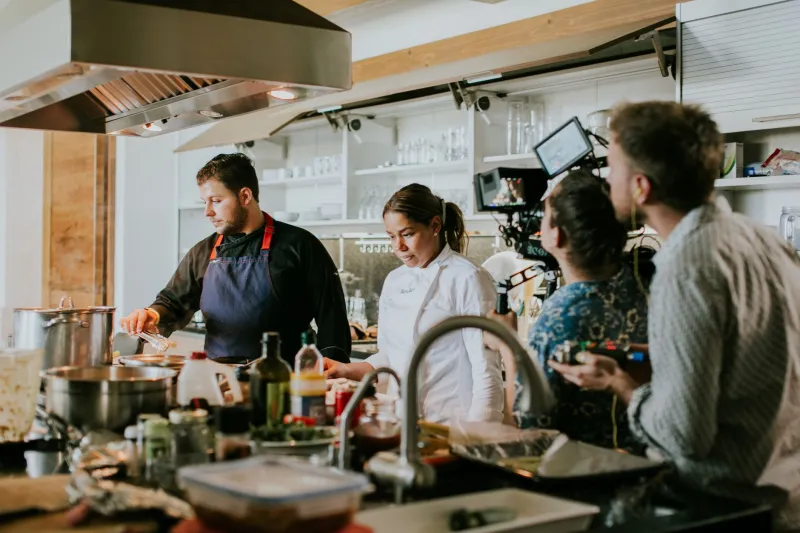
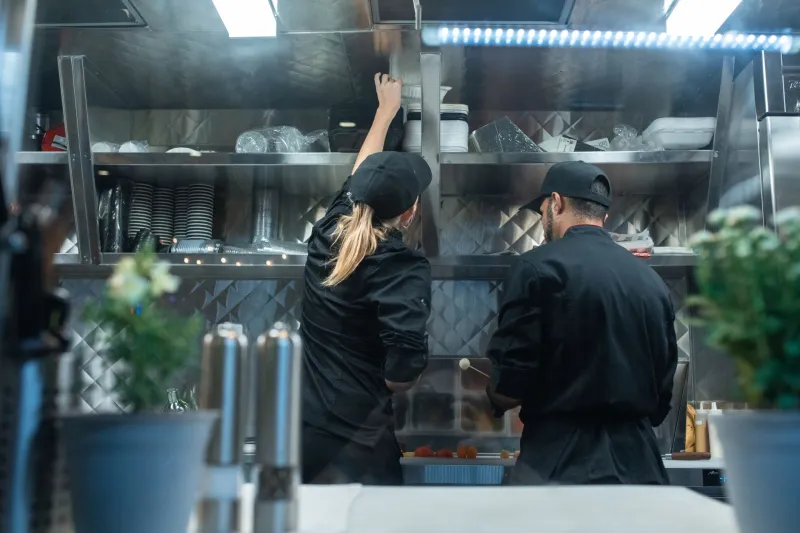
The challenge is compounded by the nature of professional kitchens, which are among the most acoustically hostile environments imaginable. Industrial ventilation systems, the constant movement of staff, the clatter of equipment — all of this must be navigated, filtered, and in many cases reconstructed in post-production to deliver the clean, purposeful soundscape that premium food television demands.
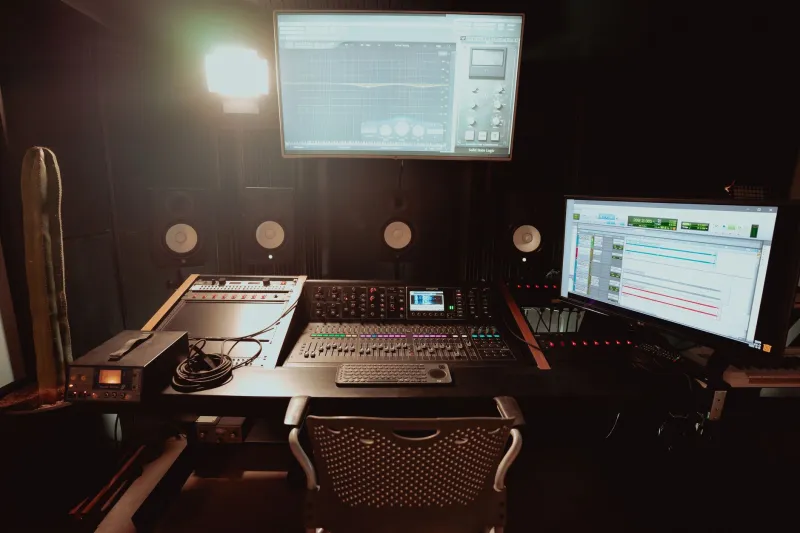
Many of the most arresting culinary sounds heard on streaming series and cable food programming are not captured live at all. They are recorded separately, in controlled studio environments, using a technique borrowed from film production: Foley artistry. A sound designer may spend hours recording dozens of variations of a single sound — the precise acoustic character of butter melting in a specific type of pan, for instance — in order to find the version that best serves the emotional tone of the scene.
Sound as Narrative Device
The most sophisticated use of sound design in gourmet cooking shows goes well beyond technical accuracy. In the hands of a skilled practitioner, audio becomes a narrative device — a tool for building tension, signaling transition, and deepening the viewer's emotional engagement with the story unfolding on screen.
Consider the way sound functions during a high-stakes moment in a competition cooking format. The ambient kitchen noise that has provided a consistent sonic backdrop throughout the episode begins to drop away as the clock counts down. Individual sounds — a knife, a flame, a chef's controlled exhale — are isolated and amplified. The effect is not merely dramatic; it is psychologically precise. The viewer's attention is directed, their pulse elevated, their investment in the outcome intensified — all through acoustic manipulation that operates almost entirely below the level of conscious awareness.
In documentary-style food programming, sound design performs a different but equally important function. When a series follows a chef through the sourcing of ingredients — walking through a predawn farmers' market in Charleston, South Carolina, or standing at the edge of a Pacific Northwest oyster bed — the audio environment communicates place, texture, and mood in ways that visuals alone cannot achieve. The crunch of gravel underfoot, the distant cry of a gull, the particular resonance of a wooden crate being set down on a stone surface: these sounds build a world around the food that invites the viewer to inhabit it rather than merely observe it.
The Musical Score and Its Culinary Function
The relationship between musical scoring and culinary storytelling is one of the more nuanced conversations currently taking place among food television's creative professionals. For much of the medium's history, cooking show scores were functional at best — pleasant background textures designed to fill silence without drawing attention to themselves.
That approach has been decisively abandoned by the genre's most ambitious productions. Contemporary gourmet cooking shows commission original scores that are as carefully considered as those produced for prestige drama series. Composers working in this space speak of the challenge of scoring food not merely as action, but as philosophy — of finding musical languages that can honor the cultural origins of a dish, the emotional biography of the chef preparing it, and the sensory experience of the viewer receiving it.
Some productions have pushed further still, experimenting with scores that incorporate the sounds of the kitchen itself — the rhythmic chopping of vegetables, the percussion of a mortar and pestle, the hiss of steam — as musical elements in their own right. The result is an audio experience that collapses the boundary between the documentary and the composed, between the found and the made.
Why This Matters for the Future of Food Television
The growing sophistication of sound design in gourmet cooking shows reflects a broader maturation of culinary television as an art form. The medium is no longer content to be merely instructional or entertaining. At its best, it aspires to something closer to genuine cinema — a form of storytelling in which every element of the production, including the acoustic environment, is in service of a larger emotional and intellectual ambition.
For the discerning viewer, this evolution opens up a new dimension of engagement with food programming. Paying attention to how a show sounds — not just how it looks or what it teaches — reveals layers of craft and intention that reward close attention.
At Gourmet Shows, we believe that the finest culinary television is a total sensory experience, one in which the work of the sound designer is as worthy of recognition as that of any other creative contributor. The sizzle, the crack, the whisper of steam: these are not accidents. They are the invisible architecture of the culinary drama unfolding on your screen.