Provenance as Performance: When Food Television's Authenticity Narrative Becomes the Product
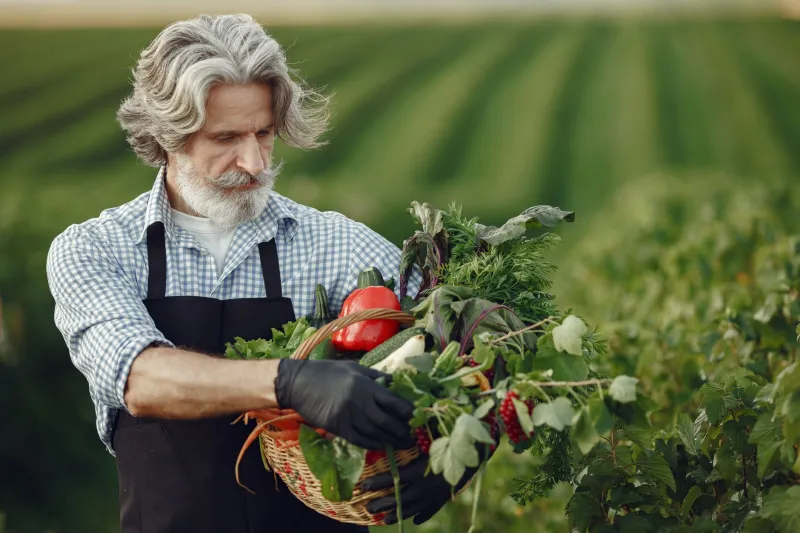
Listen carefully to the language of contemporary culinary television and a familiar vocabulary emerges with striking consistency. The tomatoes were grown by a third-generation farmer whose grandfather planted the first seeds. The salt was harvested by hand from a bay that has sustained a coastal community for centuries. The heritage grain was rescued from near-extinction by a single passionate agrarian working against the tide of industrial agriculture. These are compelling stories. They are also, with a frequency that the food entertainment industry has been reluctant to acknowledge, stories that have been shaped, simplified, and in some cases substantially embellished in service of a narrative that audiences have demonstrated they will reward with attention and loyalty.
The pursuit of authenticity has become one of the defining editorial obsessions of premium food programming in the United States. It has also, paradoxically, become one of its most sophisticated marketing fictions.
The Authenticity Industrial Complex
To understand how origin storytelling became so central to gourmet programming, it is necessary to understand the commercial environment in which that programming operates. Premium culinary content competes for audience attention against an enormous field of alternatives. Differentiating a food series in that environment requires more than beautiful cinematography and skilled cooking. It requires emotional resonance — a reason for the viewer to feel that what they are watching matters beyond the sensory pleasure of watching it.
Authenticity, in the context of food, has proven to be a remarkably durable source of that resonance. The story of a chef who sources exclusively from within a fifty-mile radius, or who has spent years documenting a disappearing regional cuisine, or who maintains personal relationships with each of the two dozen producers whose ingredients appear on a tasting menu — these narratives connect food to values that American audiences find deeply appealing: environmental stewardship, community loyalty, resistance to the homogenizing forces of industrial food production.
Producers of food content are not cynical actors when they pursue these stories. The values they invoke are genuine, and many of the chefs and food practitioners they profile hold them sincerely. The difficulty lies in what happens between the field and the frame — in the editorial decisions that transform a complicated, imperfect, often economically fraught reality into a coherent and emotionally satisfying narrative.
What the Camera Chooses Not to Follow
Consider the anatomy of a typical provenance segment in a prestige culinary series. A chef is shown visiting a farm, conversing warmly with the grower, selecting produce with evident care and expertise. The footage is golden-lit, unhurried, and intimate. The relationship between chef and farmer appears close, longstanding, and mutually sustaining.
What the camera rarely follows is the fuller context of that relationship. The farm in question may supply the featured restaurant with a small fraction of its total ingredient volume, while the majority arrives through conventional distribution channels. The chef may visit twice a year rather than weekly. The farm's economics may be precarious in ways that a single restaurant's patronage does little to address. The heritage variety being celebrated on screen may be grown on a modest plot while the farm's commercial operation is built around commodity crops.
None of this makes the relationship false. It does, however, make it considerably more complicated than the programming suggests. And the gap between the complexity of the reality and the simplicity of the narrative is precisely where authenticity becomes performance.
The Chef's Complicity — and Constraint
It would be unfair to place the burden of this critique entirely on producers. Chefs who participate in food programming are themselves navigating a set of pressures that make nuanced self-representation difficult. The market for culinary celebrity has created powerful incentives for chefs to adopt and project an authenticity identity — to be legible to audiences as someone who stands for something beyond the plate.
In conversations with culinary professionals who have participated in television projects, a recurring observation surfaces: the story that ends up on screen is rarely the story they thought they were telling. The production process — with its requirements for narrative clarity, emotional arc, and visual drama — tends to resolve ambiguity in favor of simplicity. A chef who sources thoughtfully but imperfectly becomes, in the edit, a paragon of localism. A farm that operates sustainably within real-world economic constraints becomes a pastoral ideal.
The chefs who are most candid about this dynamic tend to be those who have stepped back from the spotlight. Those still actively engaged with television projects are understandably reluctant to critique a process that has been, on balance, professionally beneficial.
Terroir as Brand Identity
The concept of terroir — borrowed from wine culture and applied with increasing looseness to everything from honey to hot sauce — has become a particularly potent tool in the food television authenticity arsenal. Terroir implies that a product is the irreducible expression of a specific place: its soil, its climate, its microbial environment, its cultural history. It is, in its rigorous application, a meaningful and useful concept.
In the hands of culinary programming, terroir has frequently become something closer to a brand identity marker — a way of signaling premium status and narrative depth rather than describing a verifiable relationship between place and product. When a chef on camera speaks of the terroir of a particular valley's stone fruit or a coastal region's oysters, the claim may be entirely defensible. It may also be a rhetorical move that serves the program's need for poetic specificity more than it illuminates anything a viewer could verify or act upon.
The food industry has taken careful note of how effectively this language moves product. Specialty food brands have adopted the vocabulary of provenance and terroir with enthusiasm, recognizing that the stories food television has taught audiences to value translate directly into purchasing behavior. The narrative has, in this sense, escaped the screen and colonized the grocery shelf.
Toward a More Honest Storytelling
The critique of authenticity performance in culinary television is not an argument for abandoning origin storytelling. The connections between food, place, and community are real and worth celebrating. The chefs and farmers who work to maintain those connections in the face of economic pressure deserve recognition and audience attention.
What the genre might productively pursue is a greater willingness to let the complexity of those relationships appear on screen — to show a chef grappling with the gap between sourcing ideals and operational realities, or to follow a farmer through the parts of the year that are difficult rather than only the parts that are beautiful. This kind of storytelling is harder to produce and less immediately satisfying to watch. It is also, arguably, more genuinely authentic than the polished provenance narratives that currently dominate the form.
The irony is that audiences, given the opportunity to encounter it, may find this honesty more compelling than the performance of authenticity they have been offered. The camera, after all, is a remarkably sensitive instrument. It tends, over time, to find what is real.