Two Kitchens, Two Realities: The Unbridgeable Gulf Between Television Cooking and Professional Service
There is a particular moment in nearly every premium cooking program that feels almost ceremonial. The chef — composed, articulate, unhurried — gestures toward a row of small glass bowls, each containing a pre-measured ingredient, each positioned with quiet precision. The camera lingers. The host exhales something appreciative. And the viewer at home absorbs, perhaps unconsciously, a foundational lesson: this is what professional cooking looks like.
It is a beautiful image. It is also, by virtually every account from working culinary professionals, a fiction.
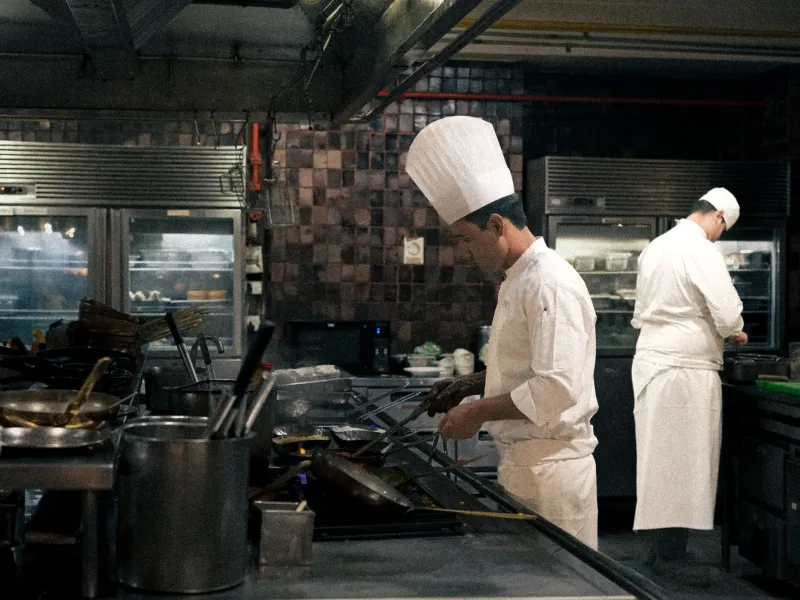
The concept of mise en place — the French culinary philosophy of having every element prepared and positioned before service begins — is real, rigorous, and genuinely central to kitchen discipline. But the version of it that television presents bears only a passing resemblance to how it actually functions during a Saturday night dinner rush at a serious American restaurant. The gap between those two realities is not merely a matter of aesthetics. It is a structural distortion that shapes how millions of viewers understand — and misunderstand — the nature of culinary craft.
The Camera's Necessary Deceptions
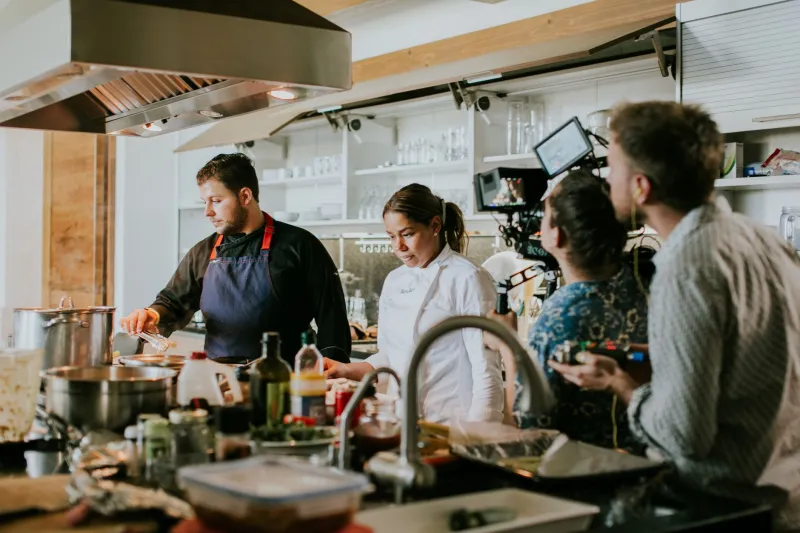
Television, by its nature, is an edited medium. Even the most earnest documentary-style cooking program is the product of multiple takes, careful lighting adjustments, and post-production decisions that compress, reorder, and occasionally reconstruct events. This is not a criticism — it is simply the grammar of the form. A thirty-minute cooking segment filmed over several hours, trimmed to its most instructive and visually compelling moments, will inevitably present a version of cooking that feels more deliberate and less contingent than the genuine article.
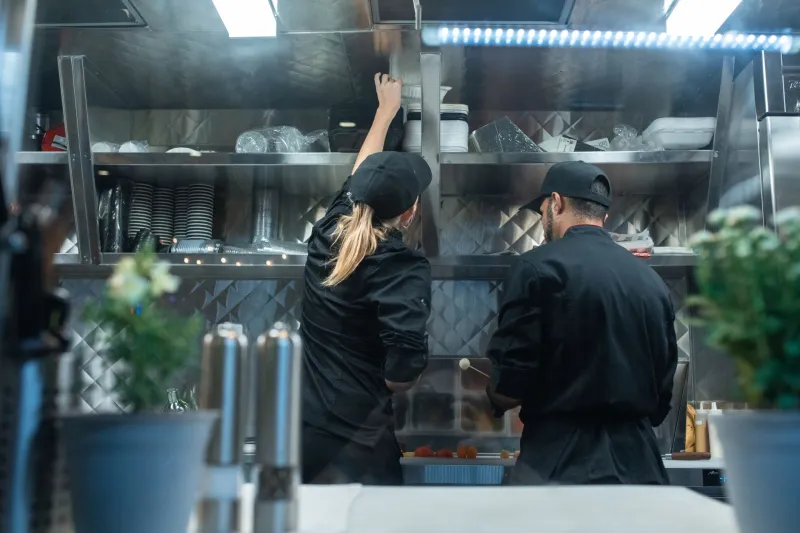
What disappears in that editing process is precisely what defines professional kitchen work: the adaptation. The sauce that breaks unexpectedly. The line cook who calls out sick forty minutes before service. The produce delivery that arrives with half the order missing. The reservation book that suddenly swells by twenty covers because a nearby restaurant lost power. In a functioning professional kitchen, the ability to improvise intelligently — to solve problems in real time without disrupting the broader rhythm of service — is not a supplementary skill. It is the skill.
Television, structurally incapable of capturing that improvisational texture with any regularity, defaults instead to the controlled demonstration. The result is a portrait of culinary excellence that is genuinely instructive in certain respects and profoundly misleading in others.
What the Home Cook Absorbs — and Misapplies
The consequences of this distortion extend well beyond professional kitchens. American home cooks, increasingly sophisticated in their engagement with food media, have absorbed the television kitchen's aesthetic as a kind of aspirational standard. Cooking shows on major streaming platforms and network television alike have cultivated a viewership that arrives at the cutting board with heightened expectations — and a set of assumptions shaped almost entirely by what they have watched rather than what they have practiced.
The mise en place myth is particularly seductive in this context. Viewers who have spent hours watching chefs gesture elegantly toward their prepared components often approach home cooking with an expectation of sequential, orderly progress. When reality intrudes — when the onions caramelize faster than anticipated, when the timing of two dishes refuses to align, when an unfamiliar cut of meat behaves differently than the television version suggested — the response is frequently self-doubt rather than adaptation.
The irony is that the genuine lesson of professional kitchen culture, the one that television consistently fails to transmit, is precisely the capacity to absorb disorder without panic. Experienced line cooks do not succeed because their evenings unfold according to plan. They succeed because they have developed, through repetition and pressure, an almost physical intelligence for managing the unexpected.
The On-Screen Chef's Particular Challenge
Perhaps the most telling evidence of the divide between television and restaurant kitchens is the well-documented difficulty that certain celebrated on-screen culinary personalities encounter when they return to — or attempt to enter — actual service environments.
This is not a universal phenomenon, and it would be unfair to suggest that television success and professional kitchen competence are mutually exclusive. Many of the most accomplished working chefs in the United States maintain active media presences without any apparent diminishment of their restaurant credentials. But the culinary world has produced a distinct category of figure: the chef whose television presence far outpaces their standing within the professional kitchen community, and who struggles visibly when the cameras are replaced by tickets.
The reasons are instructive. Television rewards clarity, patience, and narrative coherence. It rewards the ability to explain a technique while executing it, to maintain composure under the relatively gentle pressure of a production schedule, to make complexity appear accessible. The professional kitchen rewards speed, physical endurance, lateral thinking, and the capacity to subordinate individual expression to the collective demands of service. These are genuinely different skill sets, and the overlap between them, while real, is considerably smaller than the visual language of cooking television implies.
Toward a More Honest Viewership
None of this is an argument against culinary television. The best gourmet programming produced in the United States today represents a genuine cultural achievement — an accessible entry point into a world of technique, tradition, and creative ambition that would otherwise remain largely invisible to general audiences. Shows that profile working chefs in their actual environments, that follow the arc of a restaurant's development, or that document the pressures of competitive professional cooking offer viewers something genuinely valuable, provided those viewers approach the content with appropriate critical awareness.
That awareness begins with understanding what the camera cannot capture. The rhythm of a professional kitchen — its noise, its heat, its physical demand, its relentless forward motion — resists the kind of mediation that makes for compelling television. What survives the editing process is real, but it is a curated real, shaped by the requirements of the medium rather than the requirements of service.
Viewers who internalize this distinction become better consumers of culinary media and, arguably, better cooks. They learn to extract genuine technique from what they watch while remaining appropriately skeptical of the broader narrative — the suggestion that cooking, at any serious level, is fundamentally a composed and orderly activity.
The mise en place is real. The calm that surrounds it on screen is not. And somewhere in that gap lies a more honest, more demanding, and ultimately more rewarding understanding of what it means to cook professionally in America today.