Bright Lights, Dim Lessons: Why Celebrity Chef Competitions Are Failing the Next Generation of Culinary Talent
The competitive cooking format has never been more visually spectacular — or more structurally inadequate as a vehicle for genuine culinary mentorship. As ratings climb and production values soar, a troubling question emerges: are America's most celebrated chef competition programs actually teaching anything of lasting value to the talented young cooks who stand beneath their lights?
The Spectacle Imperative
There is an undeniable electricity to the modern culinary competition format. Gleaming countertops, precision-timed countdowns, and the penetrating gaze of a celebrated judge have become the defining visual grammar of food television in the United States. Programs built around this architecture consistently attract millions of viewers each week, and the networks that house them have invested accordingly — in production design, in celebrity talent fees, and in the kind of dramatic editing that transforms a poorly emulsified sauce into a near-existential crisis.
Yet within that spectacle lies a fundamental tension. The very mechanisms that make these programs compelling to watch — pressure, elimination, public judgment — are almost categorically opposed to the conditions under which meaningful culinary mentorship actually occurs. The kitchen, as any serious culinary educator will attest, is a place of repetition, patience, and incremental refinement. It is a space where failure is not a dramatic elimination moment but a quiet, essential teacher. What the competition format offers instead is failure as entertainment, stripped of the reflective process that gives it instructional weight.
What Mentorship Actually Requires
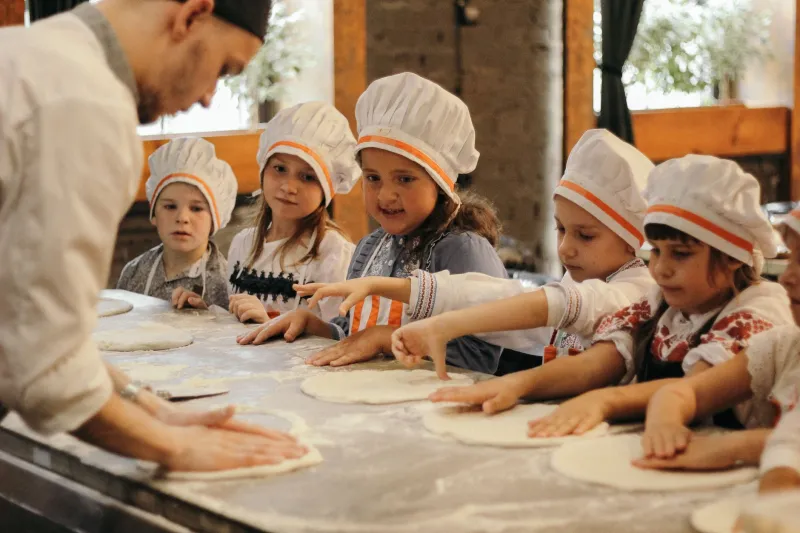
To understand the gap between what these programs promise and what they deliver, it is worth examining what genuine culinary mentorship demands. At its most effective, the relationship between a seasoned chef and an emerging cook is built on sustained proximity — hours of shared kitchen time, iterative feedback on technique, and the kind of frank, unhurried conversation that allows a young cook to understand not just what went wrong, but why, and how the correction feels in practice.
The chef-judges who populate America's most prominent competition programs are, almost universally, accomplished professionals whose real-world mentorship credentials are beyond question. The issue is not their expertise. The issue is the format in which that expertise is deployed. A thirty-second critique delivered beside a plate that cannot be retouched, in front of cameras, under time constraints, with elimination as the immediate consequence, is not mentorship. It is assessment — and the distinction matters enormously.
Assessment tells a cook where they stand. Mentorship tells them how to move forward. The competition format, by structural necessity, prioritizes the former almost entirely at the expense of the latter.
The Illusion of the Mentor Figure
Perhaps the most sophisticated sleight of hand in the celebrity chef competition genre is its persistent framing of its judge-hosts as mentor figures. The language of these programs is saturated with pedagogical warmth: contestants speak of what they have "learned" from their time on the show; judges offer guidance framed as wisdom rather than verdict; promotional materials frequently position the competition as a transformative educational experience.
This framing is not entirely without merit. Exposure to world-class professionals, even in a structured and artificial environment, carries real value. Competing at a high level under pressure develops resilience and adaptability. And the national platform these programs provide can open professional doors that would otherwise remain firmly closed to young cooks without industry connections.
But the mentor narrative, when examined closely, tends to serve the program's emotional arc more reliably than it serves the contestant's professional development. The moments of apparent mentorship — a judge kneeling beside a struggling contestant, a celebrity chef offering a quiet word of encouragement — are precisely the moments that the editing room reaches for when constructing the emotional climax of an episode. They are, in other words, content. And content, however genuinely felt in the moment, is shaped by the imperatives of television rather than the imperatives of culinary education.
The Structural Alternatives Being Overlooked
It would be reductive to suggest that the competition format is incapable of reform. Several international programs have experimented with structures that integrate more substantive mentorship components — extended workshop segments, one-on-one coaching episodes that air alongside the competition proper, and post-elimination follow-ups that track a contestant's professional trajectory in the months that follow their departure from the show.
In the American market, however, these innovations have struggled to find traction. The economics of network and streaming television reward formats that generate reliable dramatic tension, and the mentorship process — slow, private, and resistant to easy visual representation — does not lend itself naturally to that requirement. The result is a landscape in which the programs that could most plausibly claim an educational mandate are, in practice, the least structurally equipped to fulfill it.
Some culinary professionals have begun to speak openly about this gap. A number of prominent American chefs have declined invitations to participate in major competition formats, citing concerns about what the experience actually offers their junior colleagues. Others have used their platforms — through chef interview segments, podcast appearances, and social media — to articulate a more demanding vision of what televised culinary education might look like if the industry were willing to prioritize it.
Toward a More Honest Conversation
The question facing the culinary television industry is not whether competition programs should continue to exist. Their cultural footprint is too large, their audience too devoted, and their capacity to generate genuine excitement around food too valuable to dismiss. The question is whether the industry is willing to be honest about what these programs are and what they are not.
They are compelling entertainment. They are effective showcases for culinary skill under pressure. They are, at their best, genuinely inspiring documents of human determination and creativity. What they are not — despite the warm language of mentorship that surrounds them — is a reliable vehicle for the kind of deep, sustained culinary education that the next generation of American cooks deserves.
Acknowledging that distinction is not a criticism of the format. It is an invitation to supplement it — to build alongside the competition spectacle the quieter, less telegenic structures through which genuine culinary knowledge is actually transmitted. The bright lights of the competition kitchen are, and will remain, a powerful draw. The question is whether the industry is prepared to ensure that what happens beneath them amounts to something more than a well-lit audition.