What the Camera Never Shows: The Hidden Power Struggles of Culinary Mentorship
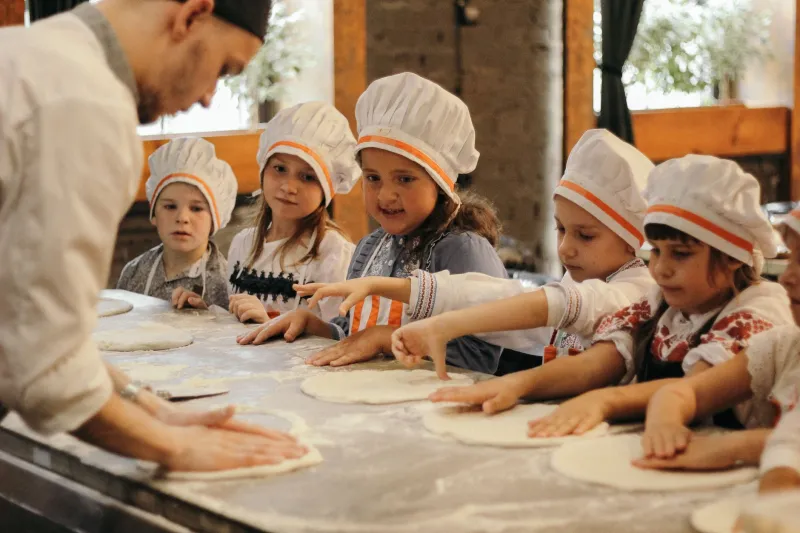
There is a particular scene that appears, in various forms, across dozens of culinary television programs. An experienced chef stands over a nervous young cook, corrects a technique with a few measured words, and the apprentice nods gratefully before producing something close to perfection. The music swells. A lesson has been learned. The kitchen hierarchy has functioned exactly as it should.
What this scene never shows is the conversation that preceded it, the weeks of silence before a mentor offered any guidance at all, or the institutional pressure that determines whose talent gets cultivated and whose quietly withers. Culinary television, for all its sophistication and visual grandeur, has developed a persistent blind spot when it comes to the true texture of professional culinary education.
The Mythology of the Benevolent Master
American food television has, for decades, constructed a specific archetype: the demanding but ultimately generous mentor whose rigor is really a form of love. From the competitive kitchen formats that dominate cable programming to the more contemplative documentary series appearing on streaming platforms, the narrative arc almost always bends toward reconciliation. The apprentice suffers, the mentor relents, and a kind of culinary wisdom is transmitted in the final act.
This framework is not entirely fictional. Many working chefs describe formative relationships with mentors who shaped not only their technique but their entire culinary philosophy. Yet the same chefs, when speaking candidly, tend to describe those relationships in terms that rarely appear on screen: favoritism, gatekeeping, credit theft, and a hierarchy so rigid that questioning it could end a career before it began.
"The camera is always looking for the moment of transformation," one culinary educator noted in a recent industry panel. "But real mentorship in a professional kitchen is mostly invisible. It's years of watching, of being ignored, of figuring out what you're allowed to ask and what you're expected to already know."
Hierarchy as Curriculum
The brigade system, codified by Auguste Escoffier in the late nineteenth century, remains the organizational backbone of most fine dining kitchens in the United States. It is a system built on clear vertical authority, and while it produces remarkable consistency and discipline, it also produces conditions that television finds difficult to dramatize without either glorifying or condemning.
Within this structure, knowledge is not freely shared. It is rationed. Junior cooks learn by proximity and observation rather than direct instruction. The chef de partie may demonstrate a technique once and expect it to be absorbed immediately. A line cook who asks too many questions risks being labeled as slow; one who asks too few risks making costly errors. The learning curve is real, steep, and largely unacknowledged by the programming that claims to document it.
What viewers rarely witness is the social calculus involved in navigating this environment. Who you align yourself with, how you manage a difficult sous chef, whether you receive credit for a dish you developed — these are not peripheral concerns. They are the actual curriculum of professional culinary training, and they are almost entirely absent from gourmet television.
The Gender and Identity Dimension
The mentorship gap on screen is not distributed evenly. Research into professional kitchen culture consistently indicates that women, cooks of color, and those from non-European culinary traditions face additional structural barriers within the mentorship pipeline. These barriers are rarely acknowledged in cooking show formats, which tend to present kitchens as meritocracies where talent alone determines advancement.
When culinary programs do address inequality, they often frame it as an individual story of triumph over adversity rather than a systemic condition requiring structural examination. The effect is to celebrate the exception while implicitly normalizing the rule. Aspiring cooks who enter professional kitchens expecting the relatively equitable environments suggested by television may find the reality profoundly disorienting.
Several chefs who have appeared on prominent food programs have spoken publicly about the disconnect between their on-screen personas — confident, articulate, generous with knowledge — and the environments in which they themselves trained. The performance of mentorship, it seems, is considerably more polished than the practice of it.
What Aspiring Chefs Actually Need to See
The consequences of this sanitized portrayal extend well beyond narrative accuracy. Young people who pursue professional cooking careers based substantially on what they have absorbed from television arrive in kitchens unprepared for the psychological demands of the environment. Attrition rates in culinary professions remain high, and industry observers frequently cite the gap between expectation and reality as a contributing factor.
Some culinary educators argue that programming has a genuine responsibility to represent the profession more honestly. Not to discourage aspiring cooks, but to equip them. Showing a young chef navigate a hostile sous chef, advocate for proper credit, or manage the emotional weight of sustained criticism would serve the audience far better than another montage of gleaming mise en place.
A handful of documentary series have begun to move in this direction, following kitchen staff through the full arc of a season rather than the compressed drama of a competition or the curated access of a chef profile. These programs tend to be less visually spectacular than their counterparts, but they offer something more durable: an honest account of what it actually means to learn inside a professional kitchen.
Toward a More Honest Kitchen Story
Culinary television at its finest is capable of genuine illumination. It has introduced American audiences to techniques, traditions, and ingredients that would otherwise remain inaccessible. It has elevated chefs to cultural figures and sparked serious conversations about food, identity, and labor. There is no reason it cannot also tell the truth about mentorship.
The messy, sometimes contentious, occasionally transformative process by which culinary knowledge passes from one generation to the next is not a less compelling story than the one currently being told. In many respects, it is a more compelling one. It involves ambition, vulnerability, power, and the quiet persistence required to master a demanding craft inside an institution that was not always designed to welcome you.
Showing that story — fully, honestly, without the reassuring resolution that television tends to impose — would not diminish the artistry of professional cooking. It would honor it.