Unfiltered and Unapologetic: How Gen Z Is Dismantling the Polished Cooking Show Formula
For decades, the architecture of the American cooking show followed a reliable blueprint: a telegenic host, an immaculate kitchen set, measured instruction, and a gleaming final dish presented under flattering studio light. Networks built empires on this formula. Audiences tuned in faithfully, week after week, trusting that competence and polish were the currencies of culinary authority.
Then came a generation that grew up watching a teenager burn garlic on a phone camera and amass two million followers by Tuesday.
Gen Z—broadly defined as those born between 1997 and 2012—now represents one of the most commercially significant viewer demographics in the United States, and their relationship with culinary entertainment is, to put it diplomatically, complicated. They consume food content voraciously. They are, by many measures, more adventurous eaters and more globally curious cooks than their millennial predecessors. Yet the formats that once anchored prime-time food television are failing to hold their attention in any meaningful way.
Understanding why requires looking beyond simple generational clichés and examining something more structurally significant: a fundamental shift in what authenticity means to a viewer who has never known a world without on-demand content.
The Trust Deficit and the Rise of the Relatable Narrator
Traditional cooking shows were built on a hierarchy of expertise. The host—whether a classically trained chef, a celebrity personality, or a home-cooking authority—occupied a position of unquestioned culinary knowledge. The viewer was, implicitly, a student. Instruction flowed in one direction.
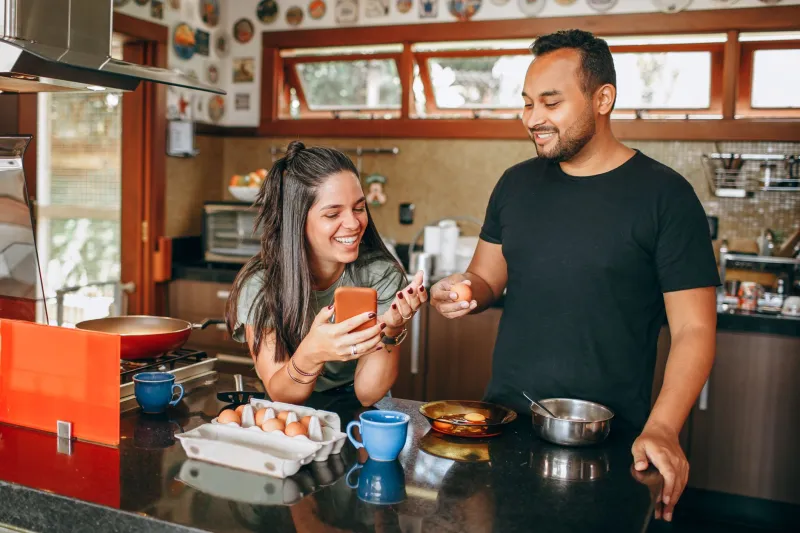
For Gen Z, this dynamic registers less as reassuring and more as alienating. According to streaming platform research cited in recent industry reports, younger viewers are significantly more likely to engage with food content when the presenter demonstrates vulnerability—when something goes wrong, when an ingredient substitution is improvised, when the creator visibly doesn't know what they're doing and figures it out in real time.
"The moment a host says 'I've made this a hundred times and it always works,' I've already lost interest," one 23-year-old food content creator based in Austin told us. "Because that's not cooking. That's performance. And I can tell the difference."
This is not simply a preference for lower production values, a mischaracterization that the traditional television industry has been too quick to embrace. Gen Z viewers are not indifferent to visual quality—they are, in fact, highly attuned to aesthetics, as evidenced by the meticulous visual grammar of the food content that dominates their preferred platforms. What they reject is the emotional distance that high production values have historically implied.
Speed, Chaos, and the Collapse of the Linear Recipe
Another structural element of traditional cooking shows that Gen Z audiences are actively abandoning is the linear recipe format. The step-by-step demonstration—prep, cook, plate, present—assumes a viewer with both the time and the inclination to follow along sequentially. It is a format designed, in many ways, for a passive audience.
Gen Z's preferred food content operates on an entirely different temporal logic. Short-form video, which dominates their consumption habits, demands that a creator establish stakes, conflict, and personality within the first three seconds. The recipe, if it appears at all, is often secondary to the narrative surrounding it: a family story, a cultural argument, a failed experiment, a spontaneous substitution made necessary by an empty pantry at midnight.
Streaming platforms have begun responding to this shift with notable urgency. Several major services have quietly greenlit development projects specifically designed to capture younger demographics—formats built around creator-led chaos, real-time problem-solving, and the kind of conversational intimacy that traditional television has historically struggled to manufacture.
"The show where someone makes a perfect beurre blanc every single time is not a show anymore," one streaming executive, speaking on background, explained. "The show where someone attempts a beurre blanc, fails twice, pivots to something completely different, and makes you laugh throughout—that's appointment viewing for a twenty-two-year-old."
Cultural Plurality and the Limits of the Mainstream Kitchen
Perhaps the most substantive critique that Gen Z food culture levels at traditional cooking television is one of representation—not merely in terms of who appears on screen, but in terms of which culinary traditions are treated as worthy of serious attention.
American cooking shows have long operated within a hierarchy that positioned European techniques as the apex of culinary achievement, with other traditions admitted to the conversation primarily as novelty or as supporting context. Gen Z, which is the most racially and ethnically diverse generation in American history, finds this framing not only dated but actively off-putting.
Food creators who have built substantial followings among younger audiences frequently cite their willingness to treat West African fermentation techniques, Southeast Asian street food traditions, or Indigenous American ingredient knowledge with the same rigor and reverence that mainstream television has historically reserved for French classical cuisine. This is not simply a matter of inclusivity as a corporate value—it reflects a genuine and sophisticated curiosity that traditional formats have been slow to accommodate.
What Survives the Disruption
It would be a mistake, however, to conclude that Gen Z has no appetite for craft, depth, or the kind of sustained culinary storytelling that gourmet television has always done well. The evidence suggests otherwise.
Long-form documentary food content—particularly when it examines the cultural, historical, or ethical dimensions of what we eat—continues to attract significant Gen Z viewership. Chef-driven narratives that foreground personal history and culinary philosophy, rather than pure technique instruction, perform strongly across streaming platforms when they are allowed to breathe and resist the urge toward artificial drama.
What Gen Z is rejecting, ultimately, is not excellence. It is the pretense of effortlessness. It is the carefully maintained fiction that mastery arrives without struggle, that the kitchen is always clean, and that the host has never once burned dinner and ordered takeout instead.
For culinary television to remain relevant to this generation, it will need to find ways to honor craft without concealing the humanity behind it. That is, in many respects, a more demanding creative challenge than anything the traditional format ever required—and also, potentially, a more rewarding one.