Uncorked Narratives: How Sommelier-Led Programming Is Quietly Rewriting the Grammar of Food Television
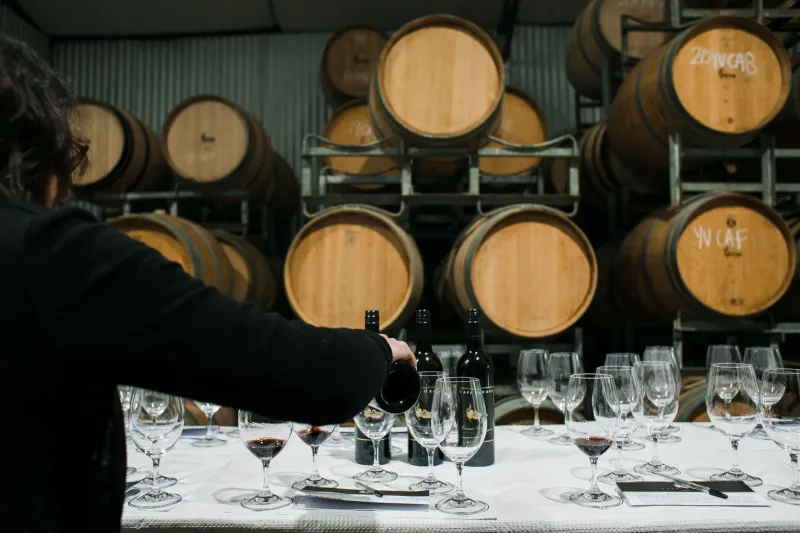
For decades, the dominant rhythm of American food television has been percussive and immediate: the sizzle of a hot pan, the countdown clock, the dramatic plating reveal. Tension was manufactured through competition; expertise was demonstrated through speed. Then, gradually, something changed. A quieter kind of culinary content began accumulating viewership — programs that unfolded at the pace of a Burgundy aging in barrel, programs guided not by chefs racing against timers but by sommeliers tracing the contours of a hillside in Napa or a limestone plateau in Chablis. The wine show had arrived, and it brought with it an entirely different set of storytelling tools.
The transformation has been subtle enough that many industry observers initially overlooked it. Yet the structural influence of sommelier-led programming on food television at large is now difficult to dismiss.
A Different Kind of Expertise on Screen
The sommelier occupies an unusual position in the culinary world — simultaneously scientist, historian, geographer, and sensory artist. Translating that expertise for a general audience requires a fundamentally different narrative approach than, say, demonstrating a beurre blanc or breaking down a whole fish. Where the chef commands a kitchen, the sommelier must conjure an invisible experience, guiding viewers toward sensations they cannot taste through a screen.
This challenge has pushed producers to develop a richer visual and editorial vocabulary. Shows such as Somm: Into the Bottle and the various wine-focused documentary series that have appeared on streaming platforms over the past several years lean heavily on landscape cinematography, archival materials, and intimate interviews conducted in candlelit cellars. The effect is closer to literary nonfiction than to traditional cooking television — unhurried, layered, and deeply invested in place.
That investment in place, in particular, has proven contagious. Increasingly, mainstream cooking programs are adopting similar techniques: extended location sequences that establish the provenance of an ingredient, slower editorial pacing that allows a dish's cultural context to breathe before the cooking begins, and a greater willingness to let expertise speak without the scaffolding of competition or conflict.
Pairing as Narrative Device
Perhaps the most significant contribution of wine programming to the broader food television ecosystem is the concept of pairing as a storytelling structure. In a sommelier-led show, the pairing of a wine with a dish is not a footnote — it is the entire dramatic arc. The tension lies in whether the acidity of a Sancerre will elevate or overwhelm a delicate piece of halibut, whether the tannins in a young Barolo will clash or harmonize with a slow-braised short rib.
This framework — two elements in dialogue, each revealing something new about the other — has begun to appear in culinary programming that has nothing to do with wine. Chef interview series increasingly structure their conversations as pairings: a chef alongside a farmer, a technique alongside its historical origins, a signature dish alongside the personal memory that inspired it. The logic is the same. Meaning emerges from relationship, not from isolation.
For American audiences, accustomed to the direct declarative style of competitive cooking shows, this shift represents a meaningful change in expectation. Viewers who have been trained by wine programming to appreciate complexity and context are arriving at other food content with more sophisticated appetites — not just for flavor, but for story.
Production Values and the Cellar Aesthetic
The visual grammar of wine television has also exerted measurable pressure on production standards across the genre. Shooting in a working vineyard or a centuries-old cave requires a different technical approach than shooting in a television kitchen: natural light that shifts dramatically across a single afternoon, environments that resist the controlled conditions a director of photography would ordinarily prefer, subjects whose expertise is expressed through restraint rather than performance.
Meeting these challenges has pushed cinematographers working in food television toward more documentary-influenced techniques — handheld cameras that follow a sommelier through narrow cellar rows, long lenses that compress the distance between vine and horizon, shallow depth of field that isolates a single glass against a blurred landscape. These choices, born of necessity in wine programming, have since migrated into cooking shows that never leave the studio, lending them a cinematic texture that distinguishes them from the flat, brightly lit aesthetic of an earlier era.
The audio design of sommelier-led content has been equally influential. The deliberate quiet of a tasting room, the sound of a cork being drawn, the particular resonance of wine meeting crystal — these sonic choices signal to the viewer that concentration is required, that this is an experience worth attending to carefully. Food programs borrowing this approach have discovered that restraint in sound design can elevate a simple cooking sequence into something approaching meditation.
Teaching Without Condescension
One of the persistent challenges of culinary television aimed at sophisticated audiences is the question of how to educate without alienating. Wine programming has, by necessity, developed particularly effective strategies for this balance. The stakes of getting it wrong are high: speak down to a knowledgeable viewer and you lose credibility; assume too much expertise and you exclude the curious newcomer who might become your most loyal audience member.
The best sommelier-led programs navigate this tension by anchoring technical information in personal narrative. A Master Sommelier explaining malolactic fermentation becomes compelling not because the chemistry is intrinsically dramatic but because the explanation is embedded in a story about a specific producer, a specific vintage, a specific moment of discovery. The information arrives through experience rather than instruction.
This approach has proven transferable. Cooking shows that have adopted similar structures — using the chef's personal history as the vehicle for technical knowledge rather than presenting technique as an end in itself — have consistently demonstrated stronger viewer retention and more enthusiastic critical reception. The lesson from the cellar, it seems, is that expertise is most persuasive when it is also intimate.
What Comes Next
As streaming platforms continue to invest in premium food content, the influence of wine programming on the broader culinary television landscape is likely to deepen. The audiences that have developed their tastes on sommelier-led content bring with them elevated expectations for production quality, narrative sophistication, and intellectual engagement — expectations that will inevitably shape commissioning decisions across the genre.
For producers and networks paying attention, the cellar offers a genuine blueprint: slow down, invest in place, let expertise unfold through relationship rather than performance, and trust that an audience given the space to discover meaning will reward that trust with genuine loyalty. The sommelier effect, quietly and persistently, is making food television more interesting. That, for viewers who love both the screen and the table, is cause for genuine celebration.